Best Extra Firm Foam Rollers: Amazon Basics Leads
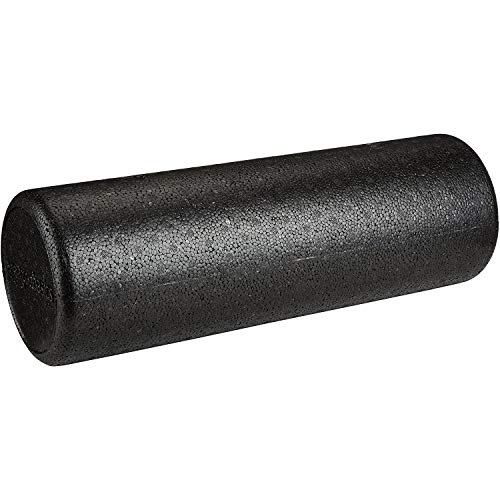
Five high-density rollers compared on length, weight and firmness, with a clear winner for most people and named conditions where a 36 in model or a textured roller takes over instead.

By Alicia RoseUpdated 15 min read
On this page
- Best organic extra firm foam roller at a glance
- How I cut the field down to five
- Is an organic extra firm foam roller actually a thing you can buy?
- What actually decides firmness: length or foam?
- 1. Amazon Basics High-Density Foam Roller — Best overall
- 2. CAP 36-Inch Firm High-Density Foam Roller — Best upgrade
- 3. Black Mountain Products High Density Extra Firm Foam Roller — Best premium
- 4. ProsourceFit High Density Foam Roller — Best budget pick
- 5. 321 STRONG Patented 3-Zone Massage Roller — Best minimal setup
- Which length fits your body and your floor?
- What owning a high-density roller actually involves
- The verdict
- FAQ
The best organic extra firm foam roller in this group is the Amazon Basics High-Density Foam Roller, an 18 in high-density cylinder that weighs just 0.6 lb and still holds its shape under body weight. If you want to lie lengthwise along your spine, the 36 in CAP Firm High-Density Foam Roller is the better buy. Density is what splits this field, and length is what decides whether that density reaches the muscle you're trying to work.
Best organic extra firm foam roller at a glance
| Pick | Length | Weight | Price |
|---|---|---|---|
Best overall Amazon Basics High-Density Foam Roller |
18 in | 0.6 lb | Check Price |
Best upgrade CAP 36-Inch Firm High-Density Foam Roller |
36 in | 0.93 lb | Check Price |
| 36 in | 1.76 lb | Check Price | |
Best budget pick ProsourceFit High Density Foam Roller |
12 in | 0.28 g listed | Check Price |
Best minimal setup 321 STRONG Patented 3-Zone Massage Roller |
12.5 in | 0.54 lb | Check Price |


How I cut the field down to five
Three things got listings cut before I compared anything.
First, soft foam. A roller that compresses under a thigh isn't doing deep tissue work, it's a pillow. Everything that survived here is described by its maker as high-density or firm, with the exception noted below.
Second, missing dimensions. If a listing didn't publish a length and a diameter, I couldn't place it against the rest of the set, so out it went. All five picks publish full dimensions.
Third, hollow cores wrapped in thin foam sleeves. Those are a different product with different failure modes, and only one textured pick here uses a wrap-over-core build at all.
What survived is a tight, comparable field:
- Two 36 in full-length rollers, at 0.93 lb and 1.76 lb
- One 18 in mid-length roller at 0.6 lb
- Two short rollers around 12 in, one smooth and one textured
- Four smooth high-density picks, one textured medium-density outlier
Diameters cluster tightly. Four sit at or near 6 in, and the 321 STRONG measures 5.5 in across. That consistency matters, because it means length and foam density are the real variables. Two of the five publish a warranty period. Three do not, and I've called that out where it counts.
Is an organic extra firm foam roller actually a thing you can buy?
Worth addressing head-on, because the phrase sends a lot of shoppers looking for something the market doesn't really stock. Every pick here is made from a synthetic closed-cell foam. ProSource names expanded polypropylene, or EPP, in its listing. CAP describes closed-cell high-density EPP foam. The 321 STRONG uses EVA foam over a core. None of these listings claims a plant-derived or certified organic material, and I'm not going to pretend otherwise.
So what should you actually judge instead? Two things the listings do state.
- Closed-cell construction. Both ProSource and CAP describe their foam as water-resistant. Closed-cell foam doesn't soak up sweat, which is the main hygiene problem with open-cell rollers.
- Recyclability. ProSource says its EPP rollers are easily recycled. That's the closest thing to an environmental claim in this whole set, and it's the manufacturer's word, not a certification.
If a certified material is genuinely non-negotiable for you, you'll need to check certification marks directly on the listing page rather than trusting a category label. The search results for this term return conventional synthetic rollers, and the honest answer is that firmness and material sourcing are separate purchases in this category. Judge the roller on density and length. Treat any organic claim as something to verify yourself.
What actually decides firmness: length or foam?
Most roundups compare foam type and stop. That's not what decides how hard a roller feels under you, and here's the trick with it: length changes perceived firmness more than foam density does.
Think about the physics. Roll your calf across a 12 in roller and your body weight concentrates on a short contact patch. Do the same on a 36 in roller and the load spreads, plus you've got more surface to stabilise against with your other leg. Same foam, noticeably different bite. The 12 in ProsourceFit will feel more aggressive on a hamstring than the 36 in CAP will, despite CAP explicitly marketing its foam to intermediate and advanced users.
Weight per inch is the useful number nobody prints. Run it across this set:
- Black Mountain, 1.76 lb across 36 in
- CAP, 0.93 lb across 36 in
- Amazon Basics, 0.6 lb across 18 in
The Black Mountain carries roughly twice the mass of the CAP over the same length. Denser foam, more material, less give. That's the densest full-length option here, and it's also the only one of the two 36 in rollers with a 90 day limited warranty behind it.
The practical read: pick your length for the body part first, then let density fine-tune the intensity. CAP's listing makes the sensible point that you control pressure by taking weight onto your arms. That works on any of these. What you can't do is make a 36 in roller feel sharp on a small muscle, or make a 12 in roller safe to lie on lengthwise.
1. Amazon Basics High-Density Foam Roller — Best overall
An 18 in high-density roller that handles quads, glutes and thoracic spine without needing a dedicated storage corner.
Best for: one roller that covers legs, glutes and upper back without dominating a room Skip it if: you want to lie lengthwise along your spine
The 18 in length is the reason this wins. It's long enough to sit across your back for thoracic extension work, wide enough to keep a rolling quad stable, and short enough to live upright in a closet. At 0.6 lb it's the second-lightest pick here, and 6 x 18 x 6 in means the diameter matches the two full-length rollers exactly. You get the same contact geometry in a format you'll actually pull out on a weeknight.
Amazon Basics names polypropylene as the material and says the molded edges add comfort. It also sells faster than anything else in this set, which tells you the 18 in format is what most people land on once they've handled a few.
The trade-off is reach. Lie down lengthwise and your head and hips hang off both ends, so full spinal rolling belongs to the 36 in picks. It also publishes no warranty period, where both 36 in rollers here do. Two sellers list it, which is more than any other pick in this group.
Pros:
- 18 in length covers legs, glutes and upper back
- Lightest full-diameter roller here at 0.6 lb
- Same 6 in diameter as the 36 in picks
- Molded edges claimed for added comfort
- Sells faster than any other pick in this set
Cons:
- Too short for lengthwise spinal rolling
- No published warranty period
- Smooth surface, so no targeted texture zones
- Slightly less foam mass than the premium 36 in option
2. CAP 36-Inch Firm High-Density Foam Roller — Best upgrade
The lightest way to get a full 36 in of firm foam under your spine.

Best for: full-length spinal rolling and thoracic extension work Skip it if: storage space is tight
This is the roller you want if lying lengthwise is the point. At 35.2 in long and 0.93 lb, it supports your whole spine while your arms and legs stay free to balance, and it's the lighter of the two 36 in options here by a wide margin. That matters more than it sounds: a 36 in roller gets carried between rooms constantly, and 0.93 lb is genuinely easy to move one-handed.
CAP says the foam is closed-cell high-density EPP that resists moisture and holds shape through repeated use, and aims the product at intermediate to advanced users. It also notes 12 in, 18 in, 24 in and 36 in lengths exist in the same line, so you can match a second roller to the same foam if you want a travel size later.
The 5.71 in diameter is marginally narrower than the 6 in group, which very slightly reduces the arch you get in a thoracic extension. Storage is the bigger cost. Nothing about a 36 in cylinder is discreet. Its 30 day warranty is the shortest published in this set, and it's the slowest seller of the five.
Pros:
- Full 36 in span supports the whole spine
- Lightest 36 in option here at 0.93 lb
- Closed-cell EPP claimed water-resistant
- Same foam available in three shorter lengths
- Publishes a warranty, unlike three picks here
Cons:
- 35.2 in length is awkward to store
- 30 day warranty is the shortest published here
- 5.71 in diameter is narrower than the 6 in picks
- Slowest seller of the five
3. Black Mountain Products High Density Extra Firm Foam Roller — Best premium
The densest 36 in roller in this set, with almost twice the foam mass of the other full-length pick.

Best for: heavier users who want the densest 36 in option here Skip it if: you travel with your recovery gear
At 1.76 lb across 6 x 36 x 6 in, this carries roughly double the mass of the CAP over the same length. More foam per inch means less compression under load, which is exactly what you want if lighter rollers have felt like they bottom out on you. It's also the only pick here that names a country of manufacture, with the listing stating it's made in the USA, and the only one carrying a 90 day limited warranty.
The full 6 in diameter matches the Amazon Basics and ProsourceFit picks, so you get the same arch geometry as the shorter rollers with three feet of support behind it. Black Mountain describes it as providing superior support for effective stretch and easing tightness, which is the standard case for a firm full-length roller.
The costs are real. It's the heaviest pick here and the most expensive, and 1.76 lb plus 36 in makes it the worst choice in this group for a gym bag. The feature bullets are also the thinnest of the five, with no material name, no weight capacity and no surface detail published. You're buying on the numbers, not the description.
Pros:
- Densest 36 in option here at 1.76 lb
- Longest published warranty in this set at 90 days
- Full 6 in diameter matches the shorter picks
- Listing states made in the USA
Cons:
- Heaviest pick here, poor for travel
- Most expensive of the five
- Listing names no foam material or weight limit
- Thinnest published feature detail in the set
4. ProsourceFit High Density Foam Roller — Best budget pick
A 12 in high-density roller that fits a gym bag and hits calves harder than anything longer here.

Best for: calves, IT bands and a gym bag Skip it if: you want a roller for back work
Short rollers get dismissed as compromises. They aren't. A 12 x 6 x 6 in cylinder concentrates your body weight on a smaller contact patch, so it bites into a calf or an IT band far more sharply than a 36 in roller does with identical foam. It's the cheapest pick in this set and the second-fastest seller, which is a rare combination.
ProSource publishes the most detail of any listing here. It names expanded polypropylene as the material, states a 300 lb maximum weight capacity, and describes the foam as water-resistant, hygienic and easily recycled. Four lengths exist in the line, from 12 x 6 in up to 36 x 6 in, so the same foam scales up if you decide you need reach later.
Back work is where it fails. Twelve inches isn't enough span to lie across safely, and using it lengthwise on the spine is a bad idea. The published weight of 0.28 g is clearly a listing error rather than a real figure, so I've flagged it in the table rather than compared it. And unlike both 36 in picks, no warranty period is published.
Pros:
- Cheapest pick in this set
- 12 in length concentrates pressure on small muscles
- Stated 300 lb weight capacity
- EPP foam described as recyclable and water-resistant
- Available in four lengths up to 36 in
Cons:
- Too short for any back or spine work
- Published weight figure of 0.28 g is unusable
- No warranty period listed
- Smooth surface with no texture zones
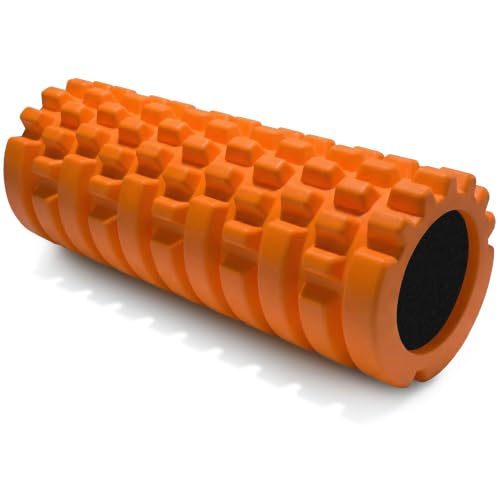
5. 321 STRONG Patented 3-Zone Massage Roller — Best minimal setup
Textured zones instead of raw density, for anyone who finds smooth firm foam too blunt.
Best for: someone who finds smooth high-density foam too blunt Skip it if: you want maximum firmness
This is the outlier, and it's here on purpose. It's the only textured roller in the set and the only one described as medium density rather than firm. 321 STRONG says its patented projections come in three sizes, with the smallest mimicking fingertip pressure, the medium mimicking thumb pressure and the largest mimicking the heel of the palm. Raised nodes concentrate force into narrow contact points, so a medium-density roller with texture can feel sharper on a knot than a smooth firm one.
Construction is closed-cell EVA foam wrapped over a core, described as BPA-free, water-resistant and rated to 300 lb without deforming. At 5.5 x 12.5 x 5.5 in and 0.54 lb it's the second-shortest and second-lightest pick here, so it travels well. The listing suggests 10 to 15 minute sessions per muscle group.
The honest problem: if extra firm is what you came for, medium density isn't it. The texture changes where the pressure lands, not how much foam resists you. It also publishes no size field beyond its dimensions, no warranty, and it's the second-most expensive pick despite being one of the shortest.
Pros:
- Only textured surface in this set
- Three projection sizes for varied pressure
- Stated 300 lb capacity, BPA-free EVA foam
- Light and short at 0.54 lb and 12.5 in
Cons:
- Medium density, not firm like the other four
- Second-most expensive despite short length
- No published warranty period
- Wrap-over-core build rather than solid foam
Which length fits your body and your floor?
Length is the decision most people get wrong, so here's the practical test before you buy.
Lie on your floor and measure from the base of your neck to your tailbone. That's the span a roller needs to cover for lengthwise spinal work. For most adults it lands well past 18 in, which is why the two 36 in picks own that job outright and the Amazon Basics does not.
Then check storage:
- Under a bed or behind a door: 36 in works, at 35.2 in for the CAP or a full 36 in for the Black Mountain
- Closet corner, upright: 18 in is the comfortable ceiling
- Gym bag or suitcase: 12 in to 12.5 in only
Diameter barely varies here, running from 5.5 in to 6 in across all five, so it isn't a differentiator. What it does tell you is that every pick sits in the standard height range, meaning your body position and technique carry over between them.
If you're buying one roller total and you're not committed to lengthwise back work, 18 in is the format that handles the most jobs. If you're buying two, the pairing that covers everything is a 36 in for the spine and a 12 in for calves and IT bands.
What owning a high-density roller actually involves
Not much, which is part of the appeal. Closed-cell foam is why. ProSource and CAP both describe their foam as water-resistant, and Amazon Basics says its roller wipes clean easily. A damp cloth after a sweaty session is the whole maintenance routine. No covers to wash, no batteries, no charging, no vibration motors to fail.
Two things do wear out over years of use. Solid high-density foam gradually takes a flat spot along the line you roll most, and molded edges scuff. Neither stops it working. Rotate the roller a quarter turn every few weeks and the flattening spreads out.
On session length, 321 STRONG suggests 10 to 15 minutes per muscle group and pairing rolling with dynamic stretching. CAP makes the more useful technical point: control intensity by supporting your weight on your arms or legs rather than dumping it all onto the foam. That single adjustment does more for comfort on a firm roller than switching products would.
Weight limits are published on two picks, both at 300 lb. The other three don't state one.
The verdict
Three tiers, three different answers.
At the cheapest end, the ProsourceFit 12 in roller is the buy. It publishes the most detail of any listing here, names EPP foam and a 300 lb capacity, and its short length makes it bite harder on calves and IT bands than anything longer. It's the pick for a gym bag and nothing else.
In the middle, the Amazon Basics 18 in roller is the best organic extra firm foam roller for most people, and the one I'd start with. Eighteen inches and 0.6 lb covers quads, glutes and thoracic spine, stores upright in a closet, and it's the fastest seller in this group by a clear margin. The cutoff that moves you off it is lengthwise spinal rolling. If that's your main use, 18 in isn't enough span.
At the top, the Black Mountain 36 in roller buys real density: 1.76 lb of foam, roughly double the CAP's mass over the same 36 in, plus a 90 day limited warranty. The CAP 36 in is the runner-up in that tier and it wins on one specific thing, weight. At 0.93 lb it's the full-length roller you'll actually carry between rooms.
FAQ
Is an extra firm foam roller worth it over a soft one?
An extra firm foam roller is worth it if soft foam has ever felt like it compressed under you without reaching the muscle. High-density foam holds its shape under load, which is what CAP, ProSource and Amazon Basics all claim for their picks here. If you're new to rolling, start by taking weight onto your arms rather than buying softer.
Which length is the best organic extra firm foam roller for back work?
The best length for back work is 36 in, because it spans the whole spine while your arms and legs stay free to balance. Both the CAP at 35.2 in and the Black Mountain at a full 36 in do this. The 18 in Amazon Basics works across your back for thoracic extension, but not lengthwise along it.
CAP 36 in or Black Mountain 36 in: which should I get?
CAP or Black Mountain comes down to weight against density. CAP is 0.93 lb, so it's easy to carry room to room, and it publishes a 30 day warranty. Black Mountain is 1.76 lb of denser foam over the same length, with a 90 day limited warranty. Heavier users who've bottomed out lighter rollers should take the Black Mountain.
Do any of these rollers use certified organic materials?
None of these rollers publishes a certified organic material claim. All five use synthetic closed-cell foam: ProSource and CAP name expanded polypropylene, and 321 STRONG names EVA. ProSource does say its EPP foam is easily recycled and water-resistant. If certification matters to you, verify the marks on the listing page directly rather than relying on a search term.
What's the most common mistake buying a foam roller?
The most common mistake is buying on foam density alone and ignoring length. A 12 in roller concentrates your weight on a small patch and feels aggressive, while a 36 in roller with identical foam spreads the load and feels gentler. Pick the length for the body part you're targeting first, then adjust intensity through your arm position.
Pull a tape measure out before you order anything. Measure the span from your neck to your tailbone, then measure the space where the roller will live between sessions, because those two numbers decide this purchase more reliably than any product description will. For most people both answers point to 18 in, which is why the Amazon Basics roller earns the default spot here: it's the one length that handles quads, glutes and upper back without becoming furniture. Buy the 36 in only if lengthwise spinal rolling is genuinely the reason you're shopping.