Best Organic Foam Roller for Athletes Who Train Hard
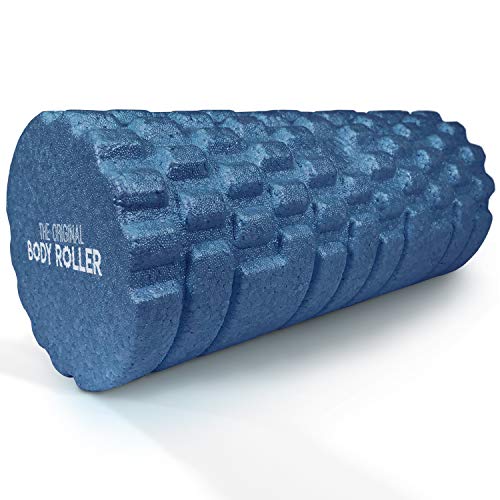
Five foam rollers ranked for athletes who need real recovery, not marketing gloss. The Original Body Roller leads on texture and travel size.

By Alicia RoseUpdated 15 min read
On this page
- Best organic foam roller for athletes at a glance
- A note on the word organic
- How I narrowed five rollers from a crowded field
- 1. The Original Body Roller — Best overall
- 2. TriggerPoint Grid 1.0 Foam Roller — Best premium
- 3. BORNEW Foam Roller Set — Runner-up
- 4. Amazon Basics High-Density Foam Roller — Best for beginners
- 5. ProsourceFit High Density Foam Roller — Best budget pick
- What actually decides a roller for athletes?
- Density, length and texture: the three levers
- How long does a foam roller last in heavy training?
- Original Body Roller vs TriggerPoint Grid: which wins?
- The verdict
- FAQ
The best organic foam roller for athletes is The Original Body Roller, a 12.5 x 5.25 in textured roller built from heavy-duty EPP with three massage zones the maker designed to mimic fingers, thumbs and palms. If you roll daily and want a hollow-core build that holds shape through heavy use, the TriggerPoint Grid 1.0 at 13 in and 1.1 lb is the better buy. The cost of picking wrong here is a roller that goes flat inside a season or feels too soft to reach a trigger point.
Best organic foam roller for athletes at a glance
| Pick | Length | Texture | Price |
|---|---|---|---|
Best overall The Original Body Roller |
12.5 in | 3D textured, three zones | Check Price |
Best premium TriggerPoint Grid 1.0 |
13 in | Multi-density grid, hollow core | Check Price |
Runner-up BORNEW Foam Roller Set |
12 in roller in a 7-piece kit | Smooth high-density | Check Price |
Best for beginners Amazon Basics High-Density Roller |
18 in | Smooth polypropylene | Check Price |
Best budget pick ProsourceFit High Density Roller |
12 in | Smooth EPP | Check Price |


A note on the word organic
You searched for the best organic foam roller for athletes, and I owe you a straight answer before the picks. None of these five listings claims certified organic material. Foam rollers are made from EPP (expanded polypropylene), EVA foam, or polypropylene: engineered plastics, not natural fibres. "Organic" in this category tends to mean recyclable, low-odour, or free of visible additives, rather than anything a certifying body would sign off on.
So how do you shop the intent honestly? Two of the picks here name their material: ProsourceFit calls out EPP that is "easily recycled, water-resistant, and hygienic", and The Original Body Roller lists heavy-duty EPP construction. EPP is a single-polymer foam that recycles more cleanly than laminated or glued rollers, which matters if that is what drew you to the word organic in the first place.
If you need certified natural rubber or cork, this set will not deliver it, and you should search those exact materials instead. If you meant "clean, single-material, low-odour foam that lasts", read on: two of the picks hit that mark honestly.
How I narrowed five rollers from a crowded field
The foam roller category on Amazon is enormous, and most of it is repackaged smooth foam sold under different brand stickers. I set three cuts up front and worked down.
- The roller had to publish a material. EPP, EVA foam, polypropylene, or a named composite. A listing that only says "high density" tells you nothing about how it will age.
- The dimensions had to be usable for an athlete. Anything under 12 in in length was cut, because a shorter roller cannot bridge both sides of the spine for upper-back work.
- The texture had to be described. Smooth or textured is a real decision, and a listing that dodges it is a listing that will disappoint half its buyers.
What survived split cleanly. Two textured rollers (The Original Body Roller and TriggerPoint), two smooth EPP rollers at different lengths (ProsourceFit at 12 in, Amazon Basics at 18 in), and one kit (BORNEW) that bundles a 12 in roller with a stick, a peanut ball and a plantar ball. Three price positions are represented, so the ranking here is not driven by cost.
The set that came out is the set that is easy to compare on the three levers that matter: length, density and texture.
1. The Original Body Roller — Best overall
The Original Body Roller wins because it packs 3D texture and heavy-duty EPP into a 12.5-inch profile that still fits a gym bag.
Best for: athletes wanting deep 3D texture in a travel-sized roller Skip it if: you need an 18-inch length for full-back rolling
The differentiator inside this set is texture. Two rollers publish a raised pattern, and this one is the more aggressive of the pair. The maker describes a three-dimensional surface with three zones intended to replicate the fingers, thumbs and palms of a therapist's hand, which is marketing language, but the ridge pattern on the listing does show three distinct heights. Heavy-duty EPP is the construction, which is the same single-polymer foam ProsourceFit uses at a lower price position, so you are paying the mid-range price here for the texture and the shaping rather than the raw material.
At 0.5 lb and 12.5 x 5.25 x 5.25 in, this is the second-lightest roller in the set and short enough to slide into carry-on luggage. The trade-off is length: an 18-inch smooth roller like the Amazon Basics gives you a wider platform for upper-back work, and this one asks you to reposition more often. For quads, calves, IT band and glutes it is the more surgical tool of the two.
Pros:
- 3D textured surface with three distinct zones
- Heavy-duty EPP, a recyclable single-polymer foam
- Compact 12.5 in length fits a gym bag
- Lightest textured roller in this set at 0.5 lb
- Sits in the middle price position for the set
Cons:
- Shorter than the 18 in Amazon Basics for upper-back rolling
- Only one seller lists it
- Aggressive texture is a lot on day one
2. TriggerPoint Grid 1.0 Foam Roller — Best premium
The Grid 1.0 is the roller to buy when you roll every day and want a hollow-core build that holds its shape.

Best for: runners and lifters who roll daily and want a hollow-core build Skip it if: you prefer solid foam or a longer roller
TriggerPoint's Grid is the only hollow-core roller in this set. The listing describes an EVA-foam-wrapped rigid tube with a multi-density grid pattern of varying ridges and nodules, and the density feel that produces is different from a solid EPP roller: firmer under the ridge, softer between them. The brand says the design holds shape "even after repeated use", which every roller in this set claims, but the hollow-core construction is the one design here that has been on sale since 2011 and still sits at the top of the category.
At 13 in and 1.1 lb, the Grid is the heaviest roller in this set and the longest textured option. Dimensions are 5.12 x 3.94 x 5.12 in, so the outer diameter is close to the Original Body Roller. This is the most expensive pick here, and what you are paying for is the hollow core and the reputation, not extra length or a bigger diameter. If you roll two or three times a week rather than daily, that premium is harder to justify against the mid-priced Original Body Roller.
Pros:
- Hollow EVA-wrapped core, unique in this set
- Multi-density grid with varied ridges and nodules
- Longest textured roller here at 13 in
- Category veteran, on sale since 2011
Cons:
- The most expensive pick in this set
- Only one seller lists it
- Heavier than the alternatives at 1.1 lb
3. BORNEW Foam Roller Set — Runner-up
BORNEW is the pick if you want a roller, a stick, a peanut ball and a plantar ball arriving in one order.

Best for: athletes who want a roller plus stick and balls in one kit Skip it if: you only need a single roller and hate storing extras
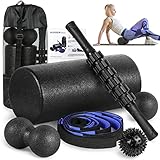
This is the only kit in the set. The listing calls it a seven-piece bundle built around a 12-inch high-density deep foam roller, a 15-inch anti-slip massage stick, a peanut massage ball and a plantar fasciitis ball, packed in a portable nylon mesh bag. Whole set weight is 1.3 lb. BORNEW rates the roller to support up to 300 lb of body weight, matching what ProsourceFit claims for its solid EPP.
Where the kit earns its place is coverage. A roller handles quads and back; a stick handles calves and forearms; a peanut ball fits either side of the spine; a plantar ball works arches and pec minor. Buying those tools separately usually costs more than the kit does. The trade-off is that the roller itself is smooth, not textured, and the individual pieces are entry-level rather than best-in-class. If you already own a roller, buying this for the extras alone is the strong case; if you want one great roller and nothing else, look higher up this list.
Pros:
- Full recovery kit in one purchase
- 300 lb weight rating on the roller
- Mesh bag included for travel and storage
- Adds a stick and two balls beyond the roller
Cons:
- Roller itself is smooth, not textured
- Slowest seller of the five picks here
- Storage bulk of a seven-piece kit
4. Amazon Basics High-Density Foam Roller — Best for beginners
The 18-inch length makes this the easiest roller in the set to learn full-back work on.
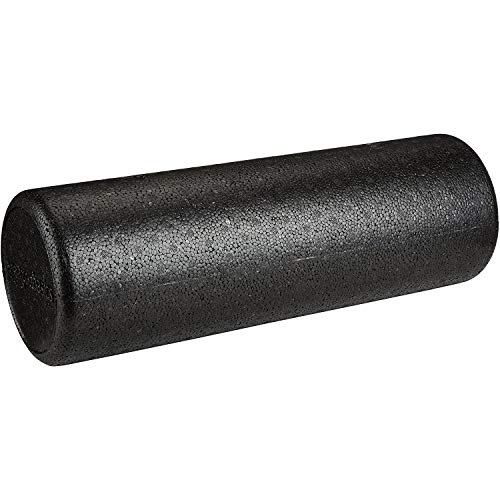
Best for: newer athletes learning full-back rolling on a smooth surface Skip it if: you want deep textured pressure on trigger points
Length is what this pick does that the others do not. At 18 in and 6 in in diameter, this Amazon Basics roller spans both sides of the spine at once, so an athlete new to rolling can lie back and move the whole thoracic region without repositioning. The surface is smooth polypropylene with molded edges. The brand says it wipes clean easily and holds shape for balance, strengthening and flexibility work, which is standard for the material.
This is the entry price band for this set and it sells faster than the rest of the group, so if the question is "what roller do most people trying foam rolling for the first time actually buy", this is the answer. What you give up is texture. A smooth roller cannot dig into a trigger point the way the Grid or the Original Body Roller can, and for an experienced athlete chasing a specific knot, that will feel like the tool is fighting you. Two sellers list it, which is the widest availability in this set.
Pros:
- 18 in length covers both sides of the spine
- Entry-tier price position
- The fastest seller of the five picks here
- Two sellers stock it, the widest availability here
Cons:
- Smooth surface, no texture for trigger points
- No published warranty
- Polypropylene rather than EPP or EVA
5. ProsourceFit High Density Foam Roller — Best budget pick
The cheapest roller in this set, and the one to throw in a suitcase for a training trip.

Best for: athletes packing a roller into carry-on luggage Skip it if: you want an 18-inch or 36-inch length for larger muscle groups
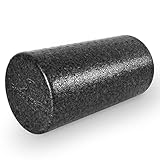
At 12 x 6 x 6 in, this is the shortest smooth roller in the set, and it sits at the cheapest of the five price positions. Construction is high-density EPP, the same single-polymer foam The Original Body Roller uses, and the brand rates it to a 300 lb weight capacity. The listing mentions the material is "easily recycled, water-resistant, and hygienic", which is the closest thing to an organic-adjacent claim in the whole set: EPP is a recyclable single-polymer plastic, and this listing is the one that names that property outright.
ProsourceFit also publishes four length options: 12 in, 18 in, 24 in and 36 in. The 12 in is what is reviewed here, and it is the travel-focused choice. If you want the same foam in a longer body, the ladder is inside the same brand. The trade-off against the Amazon Basics is length: the Amazon Basics roller sells faster and is only slightly more expensive, and its extra 6 in of length is meaningful for back rolling. Buy this one for the suitcase, not the living room.
Pros:
- Cheapest pick in this set
- EPP construction, same foam family as the Best overall
- 300 lb weight capacity
- Family of four lengths available in the same line
Cons:
- Smooth surface, no texture
- Shortest length of the set at 12 in
- No published warranty
What actually decides a roller for athletes?
Most guides compare density: soft, medium, firm. That is not what decides the purchase. Density is a floor, not a ceiling. Any roller that fails the 300 lb weight rating is out of the athlete conversation entirely, and four of these five publish that rating or an equivalent construction claim.
What actually decides it is texture and length together, and the two work against each other.
- Texture buys you targeted pressure on knots and trigger points. Ridges and nodules concentrate force on a smaller area, which is what an athlete chasing a specific spot in the glute or the IT band actually needs.
- Length buys you coverage. An 18-inch smooth roller lets you lie back and roll the whole thoracic spine without repositioning; a 12-inch textured roller makes you work harder for that same coverage but hits harder when you do land it.
If you roll to recover from specific sore spots, prioritise texture: The Original Body Roller or the TriggerPoint Grid. If you roll to warm up whole muscle groups, prioritise length: the Amazon Basics 18 in. If you travel a lot and need one tool, texture wins over length, because a shorter textured roller is more useful than a longer smooth one you cannot pack.
Density, length and texture: the three levers
Here is the shortest way to see the set:
- The Original Body Roller: mid-density, 12.5 in, aggressive 3D texture.
- TriggerPoint Grid 1.0: hollow-core firmness, 13 in, multi-density grid.
- BORNEW kit: solid high-density, 12 in roller plus stick and balls.
- Amazon Basics: firm polypropylene, 18 in, smooth.
- ProsourceFit: high-density EPP, 12 in, smooth.
Only one roller in the set uses a hollow core (Grid). Only two rollers publish a raised texture (Original Body Roller, Grid). Only one roller here goes to 18 in (Amazon Basics). Only one is a kit rather than a single tool (BORNEW). Those four facts are what should drive the choice, and every pick lands on one of them.
How long does a foam roller last in heavy training?
None of these listings publishes a warranty or a rated cycle count, so anything you read that gives you a hard number for lifespan is guessing. What you can compare from the data is construction, and construction is what actually decides the answer.
- EPP rollers (Original Body Roller, ProsourceFit) are single-polymer expanded polypropylene. They shrug off compression well and are the easiest to recycle when they eventually go flat.
- EVA foam over a hollow core (Grid) is the most compression-resistant design here because the load transfers to the rigid core, not the foam. TriggerPoint says the shape holds "even after repeated use".
- Polypropylene rollers (Amazon Basics) hold shape but the surface can polish with heavy use.
For a daily-rolling athlete, the hollow-core Grid is the durability pick. For a two-or-three-times-a-week athlete, either EPP roller will outlast the phase you go through when you actually keep rolling.
Original Body Roller vs TriggerPoint Grid: which wins?
Both are textured rollers within half an inch of each other in length. The choice comes down to construction and how often you roll.
The Grid is hollow-core EVA foam. It rolls firmer, ages slower under daily load, and costs the most in this set. The Original Body Roller is solid EPP with a more aggressive 3D pattern, weighs less at 0.5 lb versus 1.1 lb, and sits at the middle price position.
Roll every day, or you are 200 lb and above and want a roller that will not deform: pick the Grid. Roll a few times a week, want the more aggressive texture on a specific trigger point, and want to spend less: pick the Original Body Roller. There is no wrong answer between the two, and no other pick in this set does what either of these does.
The verdict
The Original Body Roller wins the best organic foam roller for athletes decision because it delivers the most aggressive texture in the set on a recyclable single-polymer EPP body, in a 12.5-inch profile that packs. If you roll daily, or you are on the heavier side, or you want the hollow-core design that has led the category since 2011, the TriggerPoint Grid 1.0 is the better buy at 13 in and 1.1 lb: the extra spend goes on the hollow core and the density grading, not on extra length.
The cutoff between the two is frequency. Under four sessions a week, the Original Body Roller is enough roller and the money you save is real. Four sessions a week or more, or a bigger body loading the roller, the Grid earns the premium. If you are new to rolling and want the widest, smoothest surface to learn on, the Amazon Basics 18 in is the honest starter pick. If you want a whole recovery kit in one order, BORNEW covers that. If you fly with a training bag, ProsourceFit is the smallest, cheapest roller here.
FAQ
Is any of these foam rollers actually certified organic?
Is any of these certified organic? No, and no listing in this set claims it. Foam rollers are engineered plastics: EPP, EVA foam and polypropylene are what the brands publish here. If you meant recyclable single-polymer construction, EPP rollers like The Original Body Roller and ProsourceFit are the closest match. If you need certified natural rubber or cork, you should search those exact materials, because this category will not deliver them.
Is a textured roller worth it over a smooth one?
Is a textured roller worth the extra spend? For athletes chasing specific trigger points, yes. The ridges concentrate pressure on a smaller area, which is what reaches a knot in the glute or the IT band that a smooth roller glides over. For general warm-up rolling on large muscle groups like quads and back, a smooth 18-inch roller is often more comfortable and covers ground faster. Buy the texture for recovery, buy the length for warm-up.
What length foam roller should an athlete buy?
What length works best depends on the muscle groups you target most. An 18-inch roller like the Amazon Basics bridges both sides of the spine, so upper-back rolling needs no repositioning. A 12 or 13-inch roller like the Original Body Roller, the Grid or the ProsourceFit is easier to travel with and better on smaller areas like calves and glutes. If you have room for one only, 12 to 13 inches is more versatile.
The Original Body Roller vs TriggerPoint Grid: which for daily use?
For daily use between the two, the TriggerPoint Grid is the more durable pick because its hollow EVA-wrapped core transfers compression to a rigid tube rather than solid foam. It also weighs 1.1 lb to the Original Body Roller's 0.5 lb, which most daily users read as a firmer, more stable feel. The Original Body Roller is the better pick for aggressive texture and travel weight if you roll a few times a week.
What is the biggest mistake athletes make with foam rollers?
The biggest mistake athletes make is rolling too fast and too hard on day one. Foam rolling is a slow, sustained pressure exercise: 30 to 60 seconds on a spot, breathing through the discomfort, rather than sawing back and forth for ten seconds. The second mistake is buying a smooth roller when you actually need a textured one, then concluding foam rolling does nothing for you. Match the tool to the job.
Pick one roller from this list, put it next to your training bag, and use it for two weeks before you decide anything. The Original Body Roller is the default answer for most athletes here because its texture and its size hit the compromise the category is really about: enough pressure to reach a trigger point, small enough to actually pack. If you already know you roll every day and you load the tool hard, skip straight to the TriggerPoint Grid. Either way, the roller that lives next to your bag is the roller that gets used, and the one that gets used is the one that earns its keep.