Best Heart Rate Fitness Tracker for Running Picks

A ranked look at seven heart rate fitness trackers, matched to runners by wrist size, warranty length, sport mode count, and how accurate the pulse read actually needs to be.

By Alicia RoseUpdated 17 min read
On this page
- Best with heart rate fitness tracker for running at a glance
- How I cut the list down to seven
- Wrist optical or armband: which reads pulse better for runners?
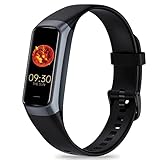
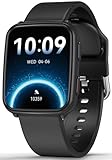
- 1. Bestinn Smart Watch H32 — Best overall
- 2. Zeacool Fitness Tracker — Runner-up
- 3. MorePro Fitness Tracker Watch — Best upgrade
- 4. MorePro Air6 — Best for pros
- 5. COOSPO HW9 Armband — Best for beginners
- 6. Bakoor Fitness Tracker — Best minimal setup
- 7. LIVIKEY Fitness Tracker — Best budget pick
- What the listings do not tell you about running accuracy
- How many sport modes does a runner actually use?
- Which pick matches which runner?
- The verdict
- FAQ
The best with heart rate fitness tracker for running here is the Bestinn Smart Watch H32, a 27.2 g wrist unit that pairs 24/7 pulse monitoring with 120+ sport modes and a 3-year manufacturer warranty. If you want dedicated pulse accuracy over an all-in-one watch, the COOSPO HW9 armband is the better buy, with a stated ±1 BPM optical read and both Bluetooth 5.0 and ANT+ so it pairs with a running watch you already own.
Best with heart rate fitness tracker for running at a glance
| Pick | Sport modes | Warranty | Price |
|---|---|---|---|
Best overall Bestinn Smart Watch H32 |
120+ | 3 years | Check Price |
Runner-up Zeacool Fitness Tracker |
25 | 1 year | Check Price |
Best upgrade MorePro Fitness Tracker Watch |
112 claim | 2 years | Check Price |
Best for pros MorePro Air6 |
120+ | 2 years | Check Price |
Best for beginners COOSPO HW9 Armband |
Pulse-only device | 12 months exchange | Check Price |
Best minimal setup Bakoor Fitness Tracker |
25 | Not listed | Check Price |
Best budget pick LIVIKEY Fitness Tracker |
9 | 1 year | Check Price |




How I cut the list down to seven
I started from a wider category slice, then cut hard. Three reasons killed most listings.
- No published heart rate feature. A running pick has to state 24/7 or on-demand pulse tracking somewhere in the listing. Vague "health tracker" descriptions were out.
- No stated water rating. Runners sweat, and a spring run in the rain is not optional. Anything without an IP68 or ATM figure got cut.
- No warranty published, or a warranty under one year. For a device you strap on for every workout, one year is the floor.
What survived is a mixed field: five wrist units, one AMOLED band, and one dedicated pulse armband. The best with heart rate fitness tracker for running in this set is not the loudest listing; it is the one whose published numbers hold up next to the others. That is why the ranking below leans on figures with units. Weights in grams, screens in inches, warranty in years. Feature bullets from the seller sit lower in the evidence stack, and I flag them as claims when I use them.
Wrist optical or armband: which reads pulse better for runners?
Most best with heart rate fitness tracker for running guides compare screen size. That is not what decides it for a runner. Sensor placement is.
A wrist optical sensor sits over a joint that flexes with every stride. That is why interval splits often show heart rate lagging or spiking wrong on a wrist unit. An armband, worn on the bicep or forearm, sits on soft tissue that does not flex, so the read is steadier once you push above 150 BPM.
The COOSPO HW9 in this set is the only armband. COOSPO states a ±1 BPM figure for the HW9's optical sensor. The wrist units in this list do not publish a comparable accuracy figure, so you cannot line them up. What you can line up is the intent of the hardware: six of these are lifestyle wrist devices with running as one of many modes, and one is a pulse-first device with running as its main job.
- If your runs are steady-state and you also want steps, sleep and phone notifications, a wrist unit is enough.
- If you run threshold intervals, tempo repeats or hill work where staying inside a heart rate zone matters, an armband is the honest answer.
1. Bestinn Smart Watch H32 — Best overall
A 27.2 g wrist unit that pairs 24/7 pulse tracking with 120+ sport modes and the longest warranty in this set.
Best for: runners who want one watch to cover training, sleep and notifications Skip it if: you need chest-strap-grade heart rate accuracy for interval work
The H32 wins on the numbers you can compare. It is one of only two picks with a stated 120+ sport mode count, and its 3 year manufacture warranty is the longest in the set by a full year over both MorePro units and by two years over the entry-tier picks. The case is thin at 0.23 x 1.7 x 0.86 in and light at 27.2 g, which matters for a device you notice on every arm swing.
Bestinn says the 1.58 in display uses "ultra high resolution", which I read as a marketing claim rather than a measured resolution figure. Take the 120+ mode count the same way: it is the seller's number, not a tested list. What is verifiable in the published data is the case size, the weight, the graphite black colourway, and the warranty length. Those three things together are why this is the winner here, not any single feature bullet.
Against the rest of this set, the H32's trade-off is the price position. It is the most expensive pick here and lacks a dedicated pulse-only sensor.
Pros:
- Longest warranty in this set at 3 years
- Light 27.2 g case for long runs
- 120+ sport modes cover most training types
- Slim 0.23 in case profile
- 24/7 heart rate stated in listing
Cons:
- Highest price position in this set
- Wrist optical sensor, no published accuracy figure
- Feature descriptions lean heavily on marketing language
2. Zeacool Fitness Tracker — Runner-up
An AMOLED band with a 5 ATM waterproof rating and a price position second only to the cheapest here.

Best for: runners on a tight budget who still want an AMOLED screen and 5 ATM rating Skip it if: you want a warranty longer than one year
The Zeacool sits in the second-cheapest slot here and still publishes the specification I care about most for a runner in the rain: a 5 ATM waterproof rating. Most entry-tier bands stop at IP68, which handles sweat and hand washing but is not rated for swimming. 5 ATM opens the door to pool sessions in the same device, which is why this is the runner-up rather than the best budget pick.
Zeacool states a 1.1 in AMOLED HD display and 25 sport modes. Both figures put it below the Bestinn on quantity, but the AMOLED panel is the same technology used on the Bakoor pick and, on paper, a step up from the LCD screens you would expect at this price position. The one-year warranty is the floor of what I would accept for a running device. It is not a strength here; it is a bare minimum.
The trade-off against the H32 is warranty length and the mode count. You give up two years of coverage and roughly 95 sport modes to save.
Pros:
- Second-cheapest pick here
- 5 ATM waterproof rating stated
- 1.1 in AMOLED display
- 25 sport modes, plenty for running plus cross-training
- 24/7 heart rate stated in listing
Cons:
- One-year warranty only
- No published weight or dimensions
- Model number in the listing reads as a placeholder string
3. MorePro Fitness Tracker Watch — Best upgrade
A 1.57 in display for glanceable pace and heart rate mid-run, with a 2 year warranty behind it.

Best for: runners who want a bigger 1.57 in display for glanceable pace and heart rate Skip it if: you prefer a lighter wrist unit for long runs
This MorePro sits in the middle of the price range and the middle of the sales spread. What earns it the upgrade slot is the display size: 1.57 in, second only to the H32's 1.58 in and a real difference over the 1.1 in AMOLED bands. When you are running at threshold and want to check heart rate zone without breaking stride, screen size is the specification that matters. Larger digits, less squinting.
MorePro states 112 sports modes on this model. Treat that as a listing claim. The 2 year warranty is a genuine mid-tier figure: better than the one-year entry-tier picks, shorter than the Bestinn's 3 years. Weight is stated at 4.97 oz, which is heavy for a fitness band. That is the honest weakness: this is a chunkier wrist unit than the H32 or the Air6, and on a long run you will feel it.
The trade-off against the Air6 sibling is straightforward. Bigger screen, heavier wrist unit.
Pros:
- Large 1.57 in display for mid-run readability
- 2 year warranty
- Automatic sleep stage tracking claimed
- 112 sport modes claimed
- 24/7 heart rate stated
Cons:
- Heaviest wrist pick here at 4.97 oz
- Generic "Fitness Tracker" model name in listing
- No dimensions published
4. MorePro Air6 — Best for pros
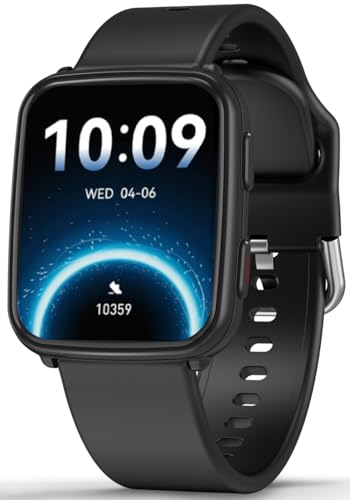
A 1.12 oz wrist unit with 120+ sport modes and a 2 year warranty in an Urban Bronze finish.
Best for: serious runners who want a light 1.12 oz wrist unit with 120+ sport modes Skip it if: you need a screen bigger than the 40.95 mm case allows
The Air6 is the light one. At 1.12 oz with a 40.95 x 34.05 x 10.8 mm case, it is the second-lightest wrist unit here after the H32 and easily the most compact by dimensions. For runners who log 40 miles a week and hate the feeling of extra mass swinging on a wrist, that is the specification that matters.
MorePro states 120+ sport modes and 24/7 heart rate and blood pressure monitoring on the Air6. The 2 year warranty matches the sibling MorePro upgrade pick. What separates the two is the trade you make on screen size: a smaller, lower-profile case here versus a bigger display on the upgrade pick. Neither is wrong, but they suit different runners.
Against the H32, the Air6 loses on warranty length and gains nothing measurable in the published specifications. It sits in the premium price band on the strength of the finish and the compact case, not on capability. That is the honest trade.
Pros:
- Light 1.12 oz wrist unit
- Compact 40.95 mm case
- 120+ sport modes claimed
- 2 year warranty
- Distinct Urban Bronze finish
Cons:
- Shorter warranty than the H32 at the premium price position
- Small case means small display
- Feature bullets lean on marketing phrasing
5. COOSPO HW9 Armband — Best for beginners
The only pulse-first device here, with a stated ±1 BPM read and both Bluetooth 5.0 and ANT+ connectivity.

Best for: new runners who want dedicated pulse accuracy paired with a phone app Skip it if: you also want steps, sleep and notifications from one device
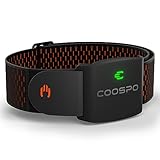
The HW9 is the different pick in this set, and the label "best for beginners" needs unpacking. It is the right first heart rate device because it does one job and does not distract you with a screen full of app icons. You strap it on the bicep, pair it to your phone or a running watch, and run. COOSPO states ±1 BPM for the optical sensor and confirms both Bluetooth 5.0 and ANT+, which means it works with Peloton, Wahoo, DDP Yoga and most GPS running watches.
The armband itself is light at 10 g with dimensions of 1.4 x 4 x 4 in, and a five-colour LED shows your current heart rate zone on the band itself. Warranty is a 12-month exchange cover, which is shorter than most wrist units here but standard for the category.
The trade-off is what it does not do. No steps, no sleep tracking, no phone notifications, no clock face. If you want a lifestyle wearable, this is not it. If you want a pulse read you can trust in Zone 4 intervals, it is.
Pros:
- Dedicated pulse sensor with ±1 BPM figure stated
- Both Bluetooth 5.0 and ANT+ for wide compatibility
- Light 10 g armband
- On-band LED zone indicator
- Bicep placement avoids wrist flex artefacts
Cons:
- No steps, sleep or notifications
- 12-month exchange warranty only
- Highest sales rank of the seven, so a slower seller here
6. Bakoor Fitness Tracker — Best minimal setup
A pink 1.1 in AMOLED band with 25 sport modes for runners who want the simplest wrist option.

Best for: runners who want a simple AMOLED band with 25 sport modes and nothing extra Skip it if: you rely on published specifications to compare fit and weight
The Bakoor is the pick with the fewest published specifications, and that is the trade-off you are making. What the listing does confirm: 1.10 in AMOLED touch display, 25 sport modes, IP68 water resistance, and the "Keep Heath" companion app for 24/7 heart rate trends. Colour is pink. Everything else about the physical unit, including weight and dimensions, is absent from the listing.
That thin data sheet is why the label is "best minimal setup" rather than a top ranking. If you are a runner who just wants a wristband that shows heart rate, counts a few sport modes and does not demand app-hopping, this is a reasonable pick. It sells faster than most of the field, second only to the H32 by the numbers I have.
Against the Zeacool at a similar price position, the Bakoor loses on the water rating specification and on published dimensions. It gains on the sales figures.
Pros:
- AMOLED display at an entry-tier price position
- 25 sport modes
- IP68 water resistance stated
- Custom watch face support claimed
- Sells faster than most picks in this set
Cons:
- No published weight, warranty or dimensions
- Only one colour listed
- Sensor accuracy figure not stated
7. LIVIKEY Fitness Tracker — Best budget pick
The cheapest of the seven, with a 1 year warranty and 9 sport modes covering the basics.

Best for: casual runners logging a few weekly runs who want the lowest price position Skip it if: you run more than nine distinct workout types
The LIVIKEY LK-F1 is the cheapest pick in this roundup. It publishes a 1.3 in display, IP68 water resistance, a stated 5 to 7 day battery life on 2 hours of charge, and 9 sport modes including running and walking. That last figure is the honest ceiling. If you also lift, swim, cycle and hike, you will run out of modes fast.
For someone whose training log has "run" and maybe "walk" on it, the mode count is not a problem. The 1 year warranty is the same as the Zeacool and the floor of what I would accept for a running device. The listing states heart rate monitors automatically all day with a manual mode through the app, which is what a runner needs at minimum for zone awareness.
The trade-off is straightforward. You save the most against every other pick and give up sport variety, screen size and any premium finish. For a runner starting out who wants to see whether they will actually wear a tracker, that is not a bad trade.
Pros:
- Cheapest pick in this set
- Stated 5 to 7 day battery life
- IP68 water resistance
- 1.3 in display
- Automatic 24/7 heart rate stated
Cons:
- 9 sport modes only
- 1 year warranty
- Slower seller than most picks here
What the listings do not tell you about running accuracy
Product pages sell features. They do not answer the question a runner actually needs answered: how does this device read heart rate at 165 BPM, on a hot day, on mile eight? None of these listings publish a lab-verified accuracy figure except the COOSPO HW9, which states ±1 BPM for its optical armband.
That silence matters. Here is what to test yourself in the first week of ownership, whichever pick you buy:
- Steady-state read. Do an easy 20-minute run. Check whether the heart rate line is smooth or spiky. Spikes on an easy run mean the sensor is losing contact.
- Interval response. Do 4 x 400 m at 5K effort. The device should show a clear rise on each rep and a clear drop on recovery. A device that flatlines is smoothing the data too aggressively.
- Cold weather. Run in temperatures under 10°C. Optical sensors struggle when peripheral blood flow drops. If the read is 30 BPM below your effort suggests, you have found the failure mode.
None of the wrist picks here name a sensor manufacturer or a sampling rate. That is normal at these price positions and it is why the armband exists as a category.
How many sport modes does a runner actually use?
The mode counts on these listings run from 9 on the LIVIKEY to 120+ on the Bestinn and Air6. That is a 13x range for what is fundamentally the same function: telling the device what you are about to do so it labels the workout correctly.
Here is the truth. A runner uses three to five modes across a year. Running. Walking. Maybe cycling for cross-training. Maybe strength or yoga for recovery days. That is it. The 120+ figure is a marketing number, not a training tool.
What actually varies with mode count is:
- How specific the workout log looks. A device with "outdoor running", "indoor running" and "treadmill" as three separate modes lets you filter your log more finely.
- Whether niche activities you already do are covered. Rowing, skating, martial arts. If you do one of these, count it, then stop counting.
- How much scrolling you do at the start of a workout. More modes means a longer list to page through. A minor annoyance, but real when your watch is cold on your wrist and the run has already started.
Mode count is worth reading, but it is not what decides this category. Warranty and sensor placement are.
Which pick matches which runner?
The best with heart rate fitness tracker for running is the one whose trade-off you can live with. Match yourself to the closest profile below.
- You run five to six days a week and want a single device. The Bestinn H32 is the pick. 3 year warranty, 27.2 g, 120+ modes.
- You run intervals and care about pulse accuracy above everything else. The COOSPO HW9 armband. Pair it with your phone or an existing running watch.
- You want a big screen for mid-run glances at heart rate zone. The MorePro upgrade at 1.57 in.
- You want low mass on the wrist for long runs. The MorePro Air6 at 1.12 oz.
- You want the cheapest way in. The LIVIKEY, if 9 sport modes covers your training.
- You want AMOLED without the top price position. The Zeacool at second-cheapest, with a 5 ATM rating.
Note on the "for running" qualifier: none of these listings publishes running-specific features like cadence sensors, running dynamics or GPS. Six are general-purpose fitness trackers that include running as one mode; one is a heart rate armband that pairs with a separate running watch. Treat the running fit as your judgement call, not a guaranteed spec.
The verdict
The best with heart rate fitness tracker for running in this set is the Bestinn Smart Watch H32. It wins on the numbers you can actually compare across seven listings: the longest published warranty at 3 years, one of only two 120+ sport mode counts, and a 27.2 g case that is among the lightest wrist units here. Two conditions flip the pick.
If you run intervals and want a sensor accuracy figure you can point to, buy the COOSPO HW9 armband instead. It is the only device here with a stated ±1 BPM figure, and its Bluetooth 5.0 plus ANT+ combination pairs with almost anything, including a GPS watch you already own.
If you want the biggest mid-run display, buy the MorePro upgrade pick, whose 1.57 in screen is the largest here after the H32's 1.58 in.
Everything else in the ranking is a variation on price position, mode count and warranty length. The H32 is the default because it does not lose on any of the three specifications a runner should care about most: warranty coverage, sport mode breadth and wrist mass. It sits in the premium price band, and that is the trade. The runner-up Zeacool exists to answer the question "what if I want an AMOLED band and a 5 ATM rating without the top price position", and it does that job well.
FAQ
Is a wrist heart rate tracker accurate enough for running?
A wrist heart rate tracker is accurate enough for easy runs and general zone awareness, but the sensor sits over a joint that flexes on every stride, which is why interval splits can show lag or spikes. Only the COOSPO HW9 armband in this set publishes a sensor accuracy figure, at ±1 BPM. For threshold work, an armband or chest strap is the honest answer.
Is the best with heart rate fitness tracker for running worth it over a phone app?
Yes, the best with heart rate fitness tracker for running is worth it because a phone app measures pulse from your fingertip on demand, not continuously during a run. A wrist or armband device reads 24/7, logs the whole workout, and shows zone data mid-run without stopping. The Bestinn H32 and MorePro Air6 both state 24/7 heart rate tracking as a standard feature.
What waterproof rating do I need for running in the rain?
For running in the rain you need IP68 as the minimum, which every wrist pick in this roundup states. IP68 covers sweat, rain and hand washing. If you also swim, look for a 5 ATM rating, which the Zeacool publishes. IP ratings and ATM ratings measure different things, so treat them as separate specifications rather than interchangeable numbers on a spec sheet.
Bestinn H32 or MorePro Air6 for daily running?
Bestinn H32 or MorePro Air6 depends on what you value more. The H32 has the longer warranty at 3 years versus 2 years and a slightly larger display. The Air6 is lighter at 1.12 oz with a compact 40.95 mm case, which suits runners who hate wrist mass on long efforts. Both state 120+ sport modes and 24/7 heart rate. Pick warranty or weight.
What is the biggest mistake buying a running fitness tracker?
The biggest mistake buying a running fitness tracker is choosing on sport mode count. Listings advertise 100+ or 120+ modes, but a runner uses three to five across a year. What actually matters is sensor placement, warranty length, water rating and case weight. The Bestinn H32 wins here on warranty and weight, not on mode count, and that is the right way to compare.
Pick the H32 if you want one device to cover the whole training week, and start it on an easy run this weekend. Watch the heart rate line for the first 20 minutes. If it reads smoothly and the zones match your effort, you have the right tool. If it spikes on easy pace, the armband path is open to you: keep the H32 for daily wear and sleep tracking, and add a COOSPO HW9 later for interval days. That two-device split is what a lot of serious runners end up with, and the numbers in this set make it easy to plan for.