Best Grip Strengthener for Recovery by Resistance

Five grip trainers compared on resistance range, kit contents and portability, with a clear winner for anyone rebuilding hand strength from a low base.

By Alicia RoseUpdated 14 min read
On this page
- Best grip strengthener for recovery at a glance
- How I screened these five kits
- Does adjustable resistance actually matter for recovery?
- One tool or a full kit: which suits you?
- 1. KDG Grip Strength Trainer 2 Pack Adjustable Resistance — Best overall
- 2. AIXPI Grip Strength Trainer — Best budget pick
- 3. FitBeast Grip Strengthener 5 Pack — Best premium
- 4. Navona 5 PCS Grip Strength Trainer Kit — Best for families
- 5. FitBeast Hand Grip Strengthener 9 Pack — Best for heavy use
- What the listings will not tell you about recovery
- When a different pick wins
- The verdict
- FAQ
The best grip strengthener for recovery is the KDG Grip Strength Trainer, because its adjustable dial spans 10 to 130 lb, so a weak hand can start near the floor and climb without buying a new tool. If you want one gripper for the lowest outlay, the AIXPI, tuning 11 to 132 lb, is the better buy. The deciding spec here is resistance range, not the piece count that most kits lead with. A gripper stuck too high does nothing for a recovering hand except hurt it.
Best grip strengthener for recovery at a glance
| Pick | Resistance range | Pieces | Price |
|---|---|---|---|
Best overall KDG Grip Strength Trainer 2 Pack |
10–130 lb claim | 2 grippers | Check Price |
Best budget pick AIXPI Grip Strength Trainer |
11–132 lb claim | 1 gripper | Check Price |
Best premium FitBeast 5 Pack Kit |
adjustable claim | 5 pieces | Check Price |
Best for families Navona 5 PCS Kit |
11–132 lb claim | 5 pieces | Check Price |
Best for heavy use FitBeast 9 Pack Kit |
10–60 lb claim | 9 pieces | Check Price |

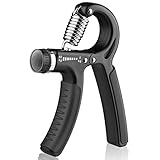


A note before the picks. The search that surfaced these products treats "recovery" loosely, and none of these listings carries a clinical or medical claim you can rely on. Several manufacturers mention rehabilitation in their marketing, but that is their copy, not a verified use. Treat every recovery reference here as a shopping consideration you judge with a clinician, not a promise the product makes.
How I screened these five kits
I compared the published specifications side by side, not the marketing. The starting field was these five grip trainers, and the useful data was thin in places. Two listings skip a warranty line entirely. One gives resistance only as "adjustable" with no numbers. So I ranked on what was actually stated and comparable.
Three things did the cutting:
- Resistance range that starts low. A recovering hand needs a gentle floor. Anything that starts high got marked down for this use.
- Stated numbers over vague claims. The KDG, AIXPI and Navona all publish a range. The FitBeast 5 Pack does not, which cost it the top spot.
- Piece count judged against purpose, not celebrated for its own sake. Nine pieces is more stuff, not more strength.
What survived is a spread from a single lightweight gripper to a nine-piece set. The KDG leads because its 10 to 130 lb span is the widest stated range in the group, and because a low floor matters more than a high ceiling when you are rebuilding. The best grip strengthener for recovery is the one you can actually squeeze on day one.
Does adjustable resistance actually matter for recovery?
Adjustable resistance is the spec that separates a rehab tool from a fixed gripper. A hand coming back from disuse cannot squeeze 50 lb, and a fixed 50 lb gripper is useless to it. A dial that starts at 10 or 11 lb lets you find a level you can close for reps, then nudge it up as the hand recovers.
Four of these five carry an adjustable claim with numbers:
- KDG: 10 to 130 lb
- AIXPI: 11 to 132 lb
- Navona: 11 to 132 lb
- FitBeast 9 Pack: progressive rings from 10–20 lb up to 50–60 lb
The FitBeast 5 Pack states "adjustable" without a range, so you cannot know its floor before buying. For recovery, the floor is the number that matters most. A 10 lb start beats a 40 lb start every time for a hand that is weak. Set the dial low, do clean reps, stop before pain. Raise it only when the low setting feels easy.
One tool or a full kit: which suits you?
The single biggest split in this set is between one gripper and a multi-piece kit. Both have a case.
A single adjustable gripper, like the AIXPI at 5.64 oz, does one job and travels light. You dial the resistance, you squeeze, you are done. Nothing to lose, nothing to store.
A kit adds finger stretchers, resistance rings and sometimes a stress ball. The FitBeast 9 Pack is the extreme case with 9 pieces at 0.82 lb total. The Navona and FitBeast 5 Pack both bundle 5 pieces. That variety helps if you want to work fingers and the palm as well as overall grip, which recovery routines often do.
The trade-off is clutter and duplication. A nine-piece kit gives you rings you may never touch. If your routine is simple, the extra pieces are dead weight in a drawer. If you want variety in one purchase, a kit earns its place. Match the piece count to the routine, not to the number on the box.
1. KDG Grip Strength Trainer 2 Pack Adjustable Resistance — Best overall
The KDG wins on the widest stated resistance range in the set and a two-pack that lets you train both hands at once.
Best for: someone rebuilding hand strength who needs to start light and climb Skip it if: you only want a single fixed-resistance gripper
The KDG's headline number is its range. KDG says the resistance adjusts from 10 to 130 lb, the widest stated span here, which means one tool covers you from a weak starting hand to a strong finishing one. For recovery that matters more than any other spec, because the floor is low enough to actually use on a bad day.
It ships as 2 grippers at a combined 3.53 oz, so you can work both hands in the same session. KDG also adds a counting function that records your reps, which saves you tracking sets in your head. The listing names forearm, wrist, finger and hand work, and mentions rehabilitation, though that is the maker's framing rather than a verified medical claim.
It sells faster than most of this set. The trade-off against the cheaper picks is the price position: this is a premium-priced choice, and there is no warranty line on the listing. The FitBeast 5 Pack does state a warranty. If that reassurance outweighs the wider range, look there instead.
Pros:
- Widest stated range in the set, 10–130 lb
- Two grippers for training both hands
- Rep counter records each session
- Light at 3.53 oz combined
- Sells faster than most picks here
Cons:
- Premium price position in this group
- No warranty stated on the listing
- Only grippers, no finger or stretch pieces
2. AIXPI Grip Strength Trainer — Best budget pick
The AIXPI is the cheapest of the five and still carries a numbered adjustable range from 11 to 132 lb.

Best for: a first-time buyer who wants one adjustable tool cheaply Skip it if: you want stretch bands and rings for finger work too
The AIXPI is the cheapest pick here and the one to reach for if you want a single tool without the kit. AIXPI states the resistance adjusts across 11 to 132 lb, which is effectively the same wide span as the winner, so a recovering hand can still start near the floor. That combination of a low price and a real numbered range is rare.
It weighs 5.64 oz and measures 0.04 x 5.83 x 4.33 in, small enough to sit in a bag. AIXPI describes an ergonomic handle wrapped in soft material, and heavy-duty plastic with reinforced metal alloy inside. Those are the maker's claims, not measured durability, so treat them as such.
The obvious limit is what you do not get. This is 1 gripper and nothing else, so there are no finger stretchers or rings for the wider hand work a rehab routine often wants. It also carries no warranty line. If you want variety, a kit like the Navona serves better. For a straight adjustable gripper at the lowest outlay, the AIXPI is hard to beat.
Pros:
- Cheapest pick in this set
- Numbered range, 11–132 lb
- Compact at 0.04 x 5.83 x 4.33 in
- Soft-wrapped handle claimed for comfort
Cons:
- Single gripper, no extra pieces
- No warranty stated
- Durability claims are the maker's, unverified
3. FitBeast Grip Strengthener 5 Pack — Best premium
The FitBeast 5 Pack is the only pick here with a stated warranty, wrapped in a five-piece kit.

Best for: a regular trainer who wants a full kit and a stated warranty Skip it if: you only need one gripper and nothing else
The FitBeast 5 Pack is the most expensive pick here, and it earns the premium label on two counts. It is the only listing in this group with a warranty line, and it is the one buyers choose most often across the set. For a purchase you plan to keep, a stated warranty is worth more than an extra ring.
The kit holds 5 pieces at 0.82 lb total, measuring 0.1 x 6.18 x 4.53 in. FitBeast describes a contoured ergonomic shape and a textured handle for a secure grip, plus adjustable resistance you can tune from beginner to advanced. The catch is that the listing gives no numbers for that range. You cannot confirm the starting resistance before it arrives, which is a real drawback for recovery, where the floor is everything.
Against the KDG, this pick trades a known resistance range for a warranty and more pieces. If you value that reassurance and the extra tools, it fits. If you need to know the exact starting resistance, the winner tells you and this one does not.
Pros:
- Only pick with a stated warranty
- The one buyers choose most often here
- Five pieces for varied hand work
- Textured handle claimed for secure grip
Cons:
- Most expensive pick in the set
- No numbered resistance range published
- Heavier kit at 0.82 lb to store
4. Navona 5 PCS Grip Strength Trainer Kit — Best for families
The Navona bundles five pieces with a numbered 11 to 132 lb gripper, making it easy to share across several hands.

Best for: a household sharing one kit across several hands Skip it if: you want the longest resistance range in this set
The Navona is the mid-priced middle ground: a five-piece kit that still publishes a real number for its main gripper. Navona states the adjustable smart-counting exerciser runs 11 to 132 lb, so the primary tool covers a wide span while the extra pieces handle finger and stretch work. That mix suits a home where more than one person uses it.
The full set weighs 0.73 lb and includes 5 pieces. Navona describes an ergonomic soft handle sized to fit various hands, which helps when the kit passes between a teenager and an adult. The listing names rehabilitation uses including arthritis and tendonitis, though again that is the maker's framing rather than proven fact.
Two things hold it back. Its stated range tops out below the KDG's 130 lb ceiling on the same starting point, so a strong user hits the top sooner. The listing gives no warranty line and no dimensions, so the packed footprint is unknown. As a shared kit with a numbered gripper, though, it does the family job well.
Pros:
- Five pieces for shared, varied use
- Numbered gripper range, 11–132 lb
- Includes a rep-counting exerciser
- Soft handle sized for different hands
Cons:
- No warranty line on the listing
- No dimensions published
- Ceiling matches rivals but no wider
5. FitBeast Hand Grip Strengthener 9 Pack — Best for heavy use
The FitBeast 9 Pack packs the most pieces in the set, with a gripper that tops out lower than the rest.

Best for: someone who wants the most pieces for varied hand and finger work Skip it if: you need a single high-resistance gripper for peak strength
The FitBeast 9 Pack is the variety play. With 9 pieces at 0.82 lb total, it holds the most tools in this group, and it sits in the entry price band as the second-cheapest pick. FitBeast lists progressive grip rings, finger stretch bands with soft, medium and firm levels, and more, so it covers small-muscle work that a single gripper cannot.
Those rings run from a gentle 10–20 lb up to 50–60 lb, per the maker. That low floor is genuinely useful for a recovering hand, and the finger stretchers add a stretch dimension the pure grippers here skip. FitBeast frames the kit around recovery from fractures, arthritis and carpal tunnel, which is its copy rather than a verified claim.
The obvious limit is the ceiling. The stated top of 60 lb sits well below the 130 lb ranges of the KDG and AIXPI, so anyone building past mid-range strength outgrows it. The kit is also the most to keep track of. If you want the widest spread of light tools, though, nine pieces is the most here.
Pros:
- Most pieces in the set, 9 total
- Low 10–20 lb ring floor for weak hands
- Finger stretchers at three levels
- Second-cheapest pick here
Cons:
- Ring ceiling only 50–60 lb claim
- No single high-resistance gripper
- Most pieces to store and track
What the listings will not tell you about recovery
Every listing here mentions rehabilitation somewhere. None of that is medical advice, and none of it is verified. The word "recovery" in the search does not make any of these a clinical device, so here is what the product pages leave out.
- They do not state a safe starting load for your condition. Only a clinician can set that. The numbers on the box are ranges, not prescriptions.
- They do not confirm build quality. Claims of "reinforced metal alloy" or "unbreakable" are marketing, not test data.
- They rarely give the closing feel. A dial marked 10 lb may feel different across brands, so start below where you think you can.
Recovery work is slow and low-load. The tool matters less than the progression. Set the resistance so you can do clean, painless reps, and raise it only when that is easy. If a squeeze hurts, stop, and ask a professional before you push. A grip trainer is a tool, not a treatment plan.
When a different pick wins
The KDG is the default, but three clear cases flip it.
- If you want the lowest cost for one tool, the AIXPI wins. It is the cheapest here and still gives you a numbered 11 to 132 lb range, so you lose almost nothing on capability.
- If a warranty matters more than a known range, the FitBeast 5 Pack wins. It is the only pick with a stated warranty and the one buyers choose most often, though its resistance range is unpublished.
- If several people share the kit, the Navona wins. Five pieces at 0.73 lb and a numbered gripper make it easy to pass around a household.
Two thresholds decide most of it. If your budget is the constraint, drop to the AIXPI. If your top strength target is under 60 lb and you want finger tools, the FitBeast 9 Pack covers it for less. Above 60 lb, you need a KDG or AIXPI gripper, because the ring kits stop there.
The verdict
The best grip strengthener for recovery is the KDG Grip Strength Trainer. Its stated 10 to 130 lb range is the widest here, and the low 10 lb floor is exactly what a recovering hand needs on day one. The two-pack lets you work both hands, the rep counter tracks your progress, and at 3.53 oz it is easy to keep within reach. For a tool you can grow into over months, nothing else in this set matches its span.
Two conditions flip that choice. If cost is the deciding factor, the AIXPI gives you nearly the same numbered range, 11 to 132 lb, as the cheapest pick here, with the trade-off of a single gripper and no warranty. If a stated warranty matters more than a known resistance range, the FitBeast 5 Pack is the only listing here that carries one, and it is the pick buyers reach for most, though you cannot confirm its floor before it arrives. Match the pick to your constraint, start light, and build slowly.
FAQ
Is a grip strengthener for recovery worth buying?
A grip strengthener for recovery is worth buying if you want a cheap, portable way to work hand and forearm strength between other exercises. These tools are simple and light, from 3.53 oz to 0.82 lb. They are not a treatment, though. Use one alongside guidance from a clinician, not instead of it, especially early in a rehab process.
What resistance range matters most for recovery?
The resistance range that matters most for recovery is the floor, not the ceiling. A weak hand needs a low starting load it can actually close. The KDG starts at 10 lb and the AIXPI at 11 lb, both low enough to use on a bad day. A high top number is useless if you cannot squeeze the lowest setting cleanly.
How is the KDG different from the AIXPI?
The KDG differs from the AIXPI mainly in count and price. The KDG ships as 2 grippers with a 10 to 130 lb range and a rep counter, sitting in the premium price band. The AIXPI is a single gripper with an 11 to 132 lb range and is the cheapest pick here. Choose the KDG for two hands, the AIXPI for lowest cost.
Do the multi-piece kits help with finger recovery?
The multi-piece kits help with finger recovery more than a single gripper can. The FitBeast 9 Pack and the Navona 5 PCS Kit add finger stretchers and rings that work small muscles a gripper alone misses. FitBeast states three stretch levels from soft at 6.6 lb upward. Those extras suit hands that need light, varied movement rather than one hard squeeze.
What is the biggest mistake buying a grip trainer for recovery?
The biggest mistake buying a grip trainer for recovery is starting too heavy. A hand rebuilding strength needs low load and clean reps, not a gripper stuck at 40 or 50 lb. Pick a tool with a low, numbered floor, set it below where you think you can, and raise it slowly. Pushing through pain sets progress back rather than forward.
Start with the KDG if you want one tool that carries you from a weak hand to a strong one, since its 10 to 130 lb range covers the whole path. Set the dial low, do painless reps, and move it up only when the light setting feels easy. If budget rules, the AIXPI gets you the same wide span for less. Whichever you pick, the tool is only half of it. Slow, consistent progression is what actually rebuilds a hand, and no gripper does that part for you.