Best Exercise Ball for Small Spaces: Pilates Picks
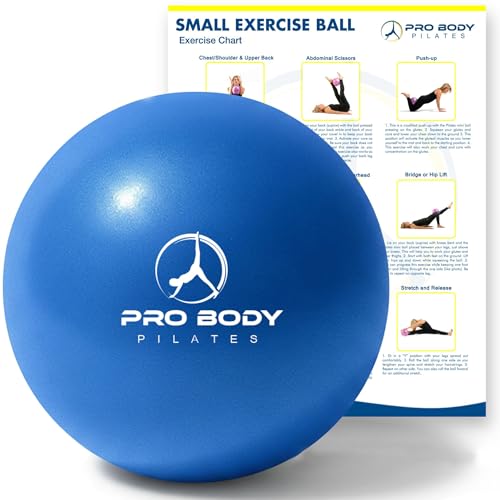
Five exercise balls compared for tight-floor apartments and rehab-style core work. The ProBody 9-inch Pilates ball wins on footprint, with a 660 lb APEXUP option for shared homes.

By Alicia RoseUpdated 14 min read
On this page
- Best exercise ball for small spaces at a glance
- How I narrowed the field to five
- 1. ProBody Pilates Ball Small — Best overall
- 2. Trideer Yoga Ball for Exercise — Best premium
- 3. APEXUP Yoga Ball — Best for heavy use
- 4. kisnbld 9 Inch Pilates Ball — Best budget pick
- 5. CIZEBO 6" or 8" Pilates Ball — Best for families
- Small ball or full-size stability ball: which fits your floor?
- How much load does an exercise ball actually need to hold?
- Storage, deflation and living with a ball in a studio
- What the listings do not tell you about inflation
- The verdict
- FAQ
The best exercise ball for small spaces is the ProBody Pilates Ball Small, a 9 in Pilates ball weighing 3.2 oz that tucks into a drawer between sessions. Step up to the Trideer Yoga Ball if you want a full 58 to 65 cm stability ball with a pump and can spare the floor. Most guides compare the wrong thing here: diameter matters more than material, and the gap between a 9-inch clinic ball and a 65 cm sphere is the real decision. Get that wrong and you buy furniture, not fitness gear.
Best exercise ball for small spaces at a glance
| Pick | Size | Load or weight | Price |
|---|---|---|---|
Best overall ProBody Pilates Ball Small |
9 in | 3.2 oz ball weight | Check Price |
Best premium Trideer Yoga Ball for Exercise |
58 to 65 cm | 330 lb claim | Check Price |
Best for heavy use APEXUP Yoga Ball |
65 cm | 660 lb claim | Check Price |
Best budget pick kisnbld 9 Inch Pilates Ball |
9 in | 4.97 oz ball weight | Check Price |
Best for families CIZEBO 6" or 8" Pilates Ball |
6 in | not listed | Check Price |


How I narrowed the field to five
Amazon's search for the best exercise ball for small spaces returns a mix of 9-inch Pilates balls, full-size 65 cm stability balls, half-domes and mini "barre" balls. The size qualifier is only partly respected: two of the five picks below are still full 58 to 65 cm balls, because Amazon treats them as relevant regardless. You have to make the small-space call yourself.
I cut anything without a stated diameter, anything shipped without an inflation method, and anything with fewer than three published specifications. The five that survived split into three clear groups:
- Clinic-size 9-inch Pilates balls (ProBody, kisnbld).
- A mid-family option at 6 in (CIZEBO).
- Full-size 58 to 65 cm stability balls (Trideer, APEXUP).
That grouping is the article. If your studio genuinely cannot fit a beach-ball-sized sphere, the top of the list is the only shortlist that matters. If you have a corner spare and want to sit on it, the bottom two earn their place.
1. ProBody Pilates Ball Small — Best overall
A 9-inch Pilates ball with a published warranty, at a weight and footprint a small apartment can absorb.
Best for: renters doing rehab-style core work in a studio or one-bedroom. Skip it if: you specifically want a full-size stability ball to sit on.
Within this set, the ProBody is the exercise ball for small spaces that best matches the promise in the keyword. The 9 in diameter is the size most physical therapy clinics stock for adult knee-squeeze work, and ProBody says the sizing is deliberately clinic-standard. The ball weighs 3.2 oz and packs down to 0.79 x 5.91 x 3.15 in flat, so it slides into a drawer, a bedside table, or a suitcase. Compared to the 2.2 lb Trideer and the 2 lb APEXUP, it is roughly a tenth of the weight and a fraction of the inflated volume.
The published 1 Year Manufacturer warranty is the strongest paperwork in the set. Of the two 9-inch balls here, ProBody is the only one that publishes a warranty at all. It sells faster than every other pick on this list. The trade-off is honest: at 9 in inflated, you cannot sit on it as a chair replacement. It is a squeeze-and-press tool, not a stability ball.
Pros:
- 9 in clinic-standard diameter
- 3.2 oz ball weight, drawer-sized when deflated
- 1 Year Manufacturer warranty published
- The fastest-selling pick on this list
- Model 4808474 with clear brand ownership
Cons:
- Not a substitute for a full-size stability ball
- Single colour (Blue) offered
- Only one seller currently lists it
2. Trideer Yoga Ball for Exercise — Best premium
A textured 58 to 65 cm stability ball with pump included, if you actually have the floor for it.

Best for: taller adults who want one 58 to 65 cm ball with a pump. Skip it if: your floor space genuinely cannot fit a 65 cm sphere.
The Trideer is the most expensive pick here and the second-fastest seller in the set. Trideer lists a size range of 58 to 65 cm (labelled L, 23 to 26 in), a 2.2 lb shipped weight, and a 1 year warranty. Trideer says the surface uses anti-slip stripes and a fine frosted texture for grip on hard floors, and claims the ball holds up to 330 lbs with a burst-resistant, slow-release structure. Those are the manufacturer's claims, not measured figures.
The pump matters. Trideer says the box includes a hand pump sized for 45, 55 and 65 cm balls, two air stoppers and instructions. That is the difference between inflating in a few minutes and swearing at a straw. Where the Trideer loses ground for a genuinely small space is the obvious one: a 65 cm sphere is a piece of furniture. It cannot be tucked away without deflating, and re-inflating for every session is not realistic. Buy this only if the ball will live in the room.
Pros:
- Size range 58 to 65 cm suits taller adults
- Manufacturer claim of 330 lb load
- Hand pump and two air stoppers included
- 1 year warranty published
- Anti-slip textured surface claim
Cons:
- Full-size ball, not compact
- Load rating is a manufacturer claim, not third-party tested
- The most expensive pick here
3. APEXUP Yoga Ball — Best for heavy use
The highest published load rating in the set, at 660 lbs claimed.

Best for: heavier users or shared homes that need the highest published load rating. Skip it if: no published warranty is a dealbreaker.
APEXUP is the second-most-expensive pick and the one to look at if load rating is your deciding number. APEXUP says the honeycomb PVC construction holds 660 lbs and deflates slowly if punctured, which is exactly double Trideer's 330 lb claim. The listed size is 65 cm (23 to 26 in, labelled L), and the ball ships at 2 lb, so it is fractionally lighter than the Trideer despite the higher rated load.
APEXUP says five sizes are available from 45 to 85 cm, which is the widest range in the set and useful if two people of different heights will share it. The size guide sits inside the listing. The gap between APEXUP and Trideer is small on paper: same size, similar weight, similar texture claims. The two things Trideer has that APEXUP does not are a published warranty and a stated pump inclusion in the specifications. If you value paperwork, Trideer wins. If you want the highest number on the load line, APEXUP wins.
Pros:
- 660 lb load claim, the highest here
- Five sizes from 45 to 85 cm listed
- 2 lb shipped weight
- Anti-slip textured surface claim
- Anti-burst PVC construction claim
Cons:
- No warranty stated in the specifications
- Full-size ball, not compact
- Load rating is a manufacturer claim
4. kisnbld 9 Inch Pilates Ball — Best budget pick
The cheapest way into the 9-inch clinic size, with multiple straws and plugs in the box.

Best for: first-time buyers testing whether a 9-inch ball fits their routine. Skip it if: you want a published warranty in writing.
kisnbld is the cheapest of the five and the second 9-inch Pilates ball in the roundup. The listed size is 9 in, the colour is Misty Rose, and the ball ships at 4.97 oz, so it is heavier than the ProBody's 3.2 oz but still trivially portable. kisnbld says the ball uses non-toxic PVC that will not burst or lose shape on hard surfaces, and the package contents include two balls, four straws, four air plugs and two plug pullers. That is unusually generous for the price position, and it matters, because tiny straws are the first thing you lose.
The trade-off against the ProBody is paperwork. kisnbld publishes no warranty in the specifications. It also sells more slowly than the ProBody in this category. If you are trying the 9-inch size for the first time and want a low-risk way to see whether the format suits your routine, this is the pick. If you want a warranty on record before you buy, the ProBody is the safer choice for a small step up.
Pros:
- The cheapest pick on this list
- 9 in clinic-standard diameter
- Two balls per pack, plus spare straws and plugs
- 4.97 oz ball weight, drawer-sized
- PVC anti-burst construction claim
Cons:
- No warranty published
- Slower-selling than the ProBody
- Only one seller currently lists it
5. CIZEBO 6" or 8" Pilates Ball — Best for families
A smaller 6-inch ball with a needle pump, sized down for shorter users or shared kid-and-adult use.

Best for: households where a smaller 6-inch ball suits shorter users or kids. Skip it if: you need the standard 9-inch clinic size.
CIZEBO is the only pick here at 6 in, which is a genuinely different size class from the two 9-inch balls above. That matters for shorter adults, teens and kids: a 9-inch ball can be too much to squeeze between the knees comfortably for smaller frames, and CIZEBO says the 6-inch size is easier to grip for those users. The listing states the ball ships in Blue with a 1 Year warranty and includes a needle air pump, which is a proper pump rather than a straw.
Two things pull it down the ranking. First, CIZEBO does not publish a ball weight in the specifications, so you cannot compare it directly to the ProBody or the kisnbld on that dimension. Second, it is the slowest seller of the five, which suggests the 6-inch size class is a narrower use case. The 1 year warranty and the needle pump are real advantages if the smaller diameter is what you actually need.
Pros:
- 6 in diameter suits smaller frames
- Needle air pump included, not a straw
- 1 Year warranty published
- Model listed clearly (CZ-BAll-6IN-L)
- Listing notes an 8-inch alternative
Cons:
- Ball weight not published
- The slowest seller of the five
- Smaller than the standard clinic 9-inch
Small ball or full-size stability ball: which fits your floor?
This is the decision the keyword hides. A "best exercise ball for small spaces" search returns two very different products, and the wrong pick becomes clutter within a week.
A 9-inch Pilates ball, like the ProBody or the kisnbld, is a squeeze tool. You use it between the knees for glute bridges, between the palms for chest activation, or under the lower back for spinal mobility. It deflates in seconds through a straw plug, folds flat, and lives in a drawer. Weight sits between 3.2 oz and about 5 oz.
A 65 cm stability ball, like the Trideer or the APEXUP, is a piece of furniture. You sit on it, roll over it for planks, or use it for weighted bridges. You do not deflate it between sessions; nobody does. It occupies a corner permanently, roughly 26 inches across in every direction.
The cutoff is honest: if you cannot commit a permanent corner to a beach-ball-sized sphere, buy a 9-inch ball and use it for what it is good at. Do not buy a 65 cm ball intending to deflate it after each workout. That plan lasts three sessions.
How much load does an exercise ball actually need to hold?
Load ratings sound reassuring and are often meaningless for small-ball buyers. Here is what the numbers in this set mean:
- Trideer says 330 lbs with a burst-resistant, slow-release structure.
- APEXUP says 660 lbs with honeycomb PVC that deflates slowly if punctured.
- ProBody, kisnbld and CIZEBO publish no load rating, because 9-inch and 6-inch balls are not sat on.
For a small squeeze ball, load rating is not the deciding specification. Diameter, grip and inflation method are. You are compressing the ball with your knees or palms, not putting bodyweight on it.
For a full-size stability ball, the load rating is one manufacturer claim among several. Both figures above are the brand's own; neither has a third-party test cited. If you are heavier, the APEXUP's 660 lb claim gives more headroom on paper. If two people of very different weights will share a ball, the higher-rated option is the more conservative buy.
Storage, deflation and living with a ball in a studio
Living with fitness equipment in a small apartment is a storage problem before it is a training problem. A few things the specifications do not spell out:
- A deflated 9-inch ball, at 0.79 x 5.91 x 3.15 in for the ProBody, fits in a bedside drawer, a laptop bag, or a shoebox alongside a resistance band.
- A 65 cm ball has no realistic storage state other than fully inflated. Behind a sofa is the usual answer.
- Inflated balls do not tolerate temperature changes well. The CIZEBO listing warns against leaving the ball on a wooden floor when not in use, particularly in hot weather. That guidance applies to most PVC balls, not just this one.
If your training plan involves guests seeing your living room, a small ball is the invisible option. If you are happy for a black sphere to become part of the furniture, a full-size ball earns its place. There is no third answer that works long-term, and pretending otherwise is how balls end up in cupboards, forgotten.
What the listings do not tell you about inflation
Inflation is where cheap balls fail their owners. Two patterns worth knowing:
- Straw plugs on small balls are consumables. The kisnbld ships with four straws and four air plugs precisely because they get lost or damaged. ProBody's spec sheet is quieter on accessories, so plan to be careful with the plug it comes with. A ball you cannot re-inflate is landfill.
- Pumps on big balls decide the unboxing experience. Trideer says its box includes a hand pump sized for 45, 55 and 65 cm balls. APEXUP does not list a pump in the specifications shown, though the listing title mentions one. If a pump is not confirmed in writing, expect to buy one separately.
The needle-style pump that ships with the CIZEBO is a step up from a straw, and matters more for a 6-inch ball than for a 9-inch. Kids and shorter adults, in particular, benefit from a firm, evenly inflated ball, and a needle pump gets closer to that than blowing through a plastic tube.
The verdict
The best exercise ball for small spaces is the ProBody Pilates Ball Small. At 9 in inflated and 3.2 oz on the shipping weight, it is the pick that keeps its promise to the room: draw open, ball out, ten-minute session, ball back in the drawer. The published 1 Year Manufacturer warranty is the strongest paperwork among the two 9-inch options, and it is the fastest-selling pick in the set.
Two conditions flip that recommendation. If you have a permanent corner to spare and want to sit on the ball, the Trideer Yoga Ball is the better buy: 58 to 65 cm, pump and stoppers in the box, 330 lb load claim, 1 year warranty. If you are heavier or the ball will be shared across very different bodyweights, step across to the APEXUP for the higher 660 lb load claim, at the cost of no published warranty.
Budget-first buyers get real value from the kisnbld: the cheapest of the five, a two-ball pack, and enough spare straws to survive early mistakes. Families with shorter users or kids should shortlist the CIZEBO at 6 in.
FAQ
Is an exercise ball for small spaces actually worth it in a studio apartment?
An exercise ball for small spaces is worth it in a studio if you buy the right size. A 9-inch Pilates ball weighs a few ounces, deflates in seconds and lives in a drawer, so it costs you no floor. A 65 cm stability ball earns its keep only if you commit a permanent corner to it. Get the size right and it is one of the highest-value pieces of home fitness kit you can own.
What size exercise ball fits between adult knees for Pilates work?
The size that fits between adult knees for Pilates and physical therapy protocols is 9 in, which is why ProBody and kisnbld both build to that spec. Smaller frames, teens and kids often find 9 inches too wide to grip comfortably, and a 6 in ball like the CIZEBO becomes easier to hold. The 9-inch size is the clinic default; step down only if it is genuinely too big.
ProBody vs kisnbld: which 9-inch Pilates ball should I buy?
Between ProBody and kisnbld, the ProBody wins on paperwork and popularity: it publishes a 1 Year Manufacturer warranty, weighs 3.2 oz, and sells faster than the kisnbld in this category. The kisnbld wins on price and pack contents, shipping two balls plus four straws and four plugs. Choose ProBody if warranty matters; choose kisnbld if you want the cheapest way to try the 9-inch clinic size.
How much weight does a full-size stability ball need to support?
A full-size stability ball needs to support well above your bodyweight, because dynamic movement briefly loads the ball with more than your static weight. Trideer says 330 lbs, APEXUP says 660 lbs. Both are manufacturer claims, not independently tested figures. For most single users, the Trideer's 330 lb rating is enough headroom. For heavier users or shared homes, APEXUP's 660 lb claim gives a larger safety margin on paper.
Can I use a small exercise ball as a chair for active sitting?
You cannot use a small exercise ball as a chair. A 9-inch or 6-inch Pilates ball is a squeeze tool, not a seat, and none of the small picks here publish a load rating for sitting. Active sitting is a full-size stability ball job, which is what Trideer and APEXUP describe. If a chair replacement is the goal, buy the 65 cm ball and accept the floor space it takes.
Start with the size that suits your room, not the load number that suits your ego. The ProBody Pilates Ball Small is the default answer for anyone doing rehab-style, mat-based or between-the-knees work in a room that already feels full. It costs the floor almost nothing, backs itself with a written warranty, and sells faster than the other picks here for a reason: it does one job well and gets out of the way. If your apartment can actually spare the corner and you want to sit, roll or plank on a full sphere, cross the line deliberately and buy the Trideer or the APEXUP for the job they are built for.