Best Exercise Ball for Bad Knees: Deciding Spec
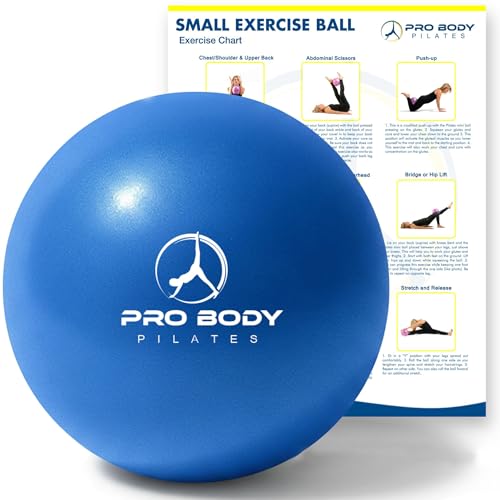
Five exercise balls compared for readers with sore knees, ranked by what actually helps: a firm 9-inch squeeze ball, a 23-26 in stability ball, and three alternates.

By Alicia RoseUpdated 14 min read
On this page
- Best exercise ball for bad knees at a glance
- How the five picks were screened
- The deciding spec most guides skip
- 1. ProBody Pilates Ball Small — Best overall
- 2. Trideer Yoga Ball for Exercise — Best large-capacity
- 3. ProBody Pilates Yoga Ball — Best premium
- 4. Trideer 9 Inch Pilates Ball with Inflation Straw — Runner-up
- 5. APEXUP 9 Inch Pilates Ball Small Exercise Ball for Yoga — Best budget pick
- Small 9-inch ball or full 23-26 in ball?
- How does a ball actually help sore knees?
- What the listings do not tell you about bad knees
- The verdict
- FAQ
The best exercise ball for bad knees is the ProBody Pilates Ball Small, a 9 in, 3.2 oz squeeze ball you can hold between your knees or under a thigh for low-load, joint-friendly work at home. If you need a full-size ball for supported sitting or gentle hip mobility, the Trideer Yoga Ball for Exercise in the 23-26 in L size, rated by the listing to 330 lb, is the better buy. Neither is a substitute for advice from your clinician.
Best exercise ball for bad knees at a glance
| Pick | Size | Type | Price |
|---|---|---|---|
Best overall ProBody Pilates Ball Small |
9 in | Small squeeze ball | Check Price |
Best large-capacity Trideer Yoga Ball for Exercise |
23-26 in (L) | Full stability ball 330 lb claim |
Check Price |
Best premium ProBody Pilates Yoga Ball |
23-26 in (L) | Full stability ball 880 lb test claim |
Check Price |
Runner-up Trideer 9 Inch Pilates Ball |
9 in | Small squeeze ball straw inflation |
Check Price |
Best budget pick APEXUP 9 Inch Pilates Ball |
9 in (23 cm) | Small squeeze ball | Check Price |



How the five picks were screened
The best exercise ball for bad knees is not one shape of ball. It is two. Sore knees benefit from low-load isometric work that avoids deep flexion, and they benefit from supported sitting that lets the hips and core do more so the knees do less. Those are different jobs, and they need different tools.
Three picks were cut on the way to five:
- Anything that failed on published size. If the listing did not state a diameter I can compare, I did not include it.
- Anything only sold as a bundle. A single-ball listing keeps the size and warranty attached to what you actually receive.
- Anything without at least one specification beyond colour and count. I need a number to line up against the others.
What survived is three 9-inch squeeze balls and two 23-26 in stability balls, all in the same category path of Exercise Balls. That split is deliberate. It matches the two ways a ball earns its place in a sore-knee routine.
None of these listings is marketed as a medical device. Nothing in this article is medical advice. If your knees hurt in a way that has changed recently, ask a clinician before adding load, and take a physical therapist's protocol over a stranger's website.
The deciding spec most guides skip
Most roundups compare burst rating first. That is the wrong number for the best exercise ball for bad knees. Burst rating matters if you are bouncing or loading the ball with a barbell. For a knee-friendly routine, the spec that decides it is diameter, because diameter controls two things at once: how far your knee has to bend to use the ball, and how much of your bodyweight the ball takes when you sit or lean on it.
Two rules follow from that.
- A 9-inch ball is a squeeze tool. Held between your knees during a bridge, or under a thigh during a supine leg lift, it gives you a soft target for an isometric contraction without asking the knee to flex past neutral. Three of the picks here sit at 9 in: the ProBody Pilates Ball Small, the Trideer 9 Inch Pilates Ball, and the APEXUP 9 Inch Pilates Ball.
- A 23-26 in ball is a support tool. Sit on it with feet flat and hips slightly above knees, and the knee angle stays open. Lean your back on it against a wall for supported squats and you set the depth yourself. Two picks match that size here: the Trideer Yoga Ball for Exercise and the ProBody Pilates Yoga Ball, both listed as L (23-26 in / 58-65 cm).
That is the whole map. If your routine calls for a squeeze, you want 9 in. If it calls for supported sitting or wall squats, you want 23-26 in. Buy the one your programme actually uses, not the one that looks more like gym equipment.
1. ProBody Pilates Ball Small — Best overall
A 9 in, 3.2 oz squeeze ball at the size PT clinics stock, which is exactly what most bad-knee protocols call for.
Best for: adults doing PT-style between-the-knees squeezes at home Skip it if: you want a full-size stability ball to sit or roll on
This is the pick for a reader whose knees hurt and whose sheet of home exercises includes the words "squeeze the ball". The 9 in diameter is small enough to sit comfortably between adult knees during a bridge, and light at 3.2 oz so it does not migrate when you shift. ProBody says the size matches what PT clinics stock, and among the five picks it is the one whose feature copy is written for that use rather than for general fitness. It carries a 1 Year Manufacturer warranty, one of only two picks here with a stated warranty period alongside the two full-size balls. Sales rank puts it as the one buyers choose most often among the small balls in this set. The trade-off against the runner-up is inflation: the box does not mention a straw, so you will want to plan how you top it up. Against the full-size picks, it does none of the sitting or wall-squat work.
Pros:
- 9 in diameter matches common home rehab protocols
- Light at 3.2 oz, easy to store in a drawer
- 1 Year Manufacturer warranty stated
- The one buyers choose most often among the small balls here
- Made by a brand that also sells the 23-26 in version
Cons:
- Not useful for supported sitting or wall squats
- Inflation method is not detailed on the listing
- Second-cheapest here, not the outright budget option
2. Trideer Yoga Ball for Exercise — Best large-capacity
A 23-26 in stability ball with a listed 330 lb load rating and a pump in the box, for readers whose knee routine calls for supported sitting rather than squeezing.

Best for: taller users who want active sitting with a 330 lb load rating Skip it if: you only need a small squeeze ball for isolated knee work
If your knees do best when your hips sit above them, a 23-26 in ball is what you want under you. Trideer says the ball is engineered to hold up to 330 lb (150 kg) without losing shape, and the listing describes anti-slip stripes and a fine frosted texture for grip against the floor. Weight is 2.2 lb, and the box includes a quick-inflation pump, two air stoppers and instructions, so the first setup does not need a separate purchase. This is the most expensive pick in the set, tied for the premium price band with the ProBody 65cm. It sells faster than the ProBody 65cm here, though. The trade-off against the premium ProBody is the safety wording: Trideer says burst-resistant with slow air release, while ProBody publishes a specific 880 lb test figure and calls out the slow-deflate pattern by name. For most readers who want a workhorse ball, that difference is a preference, not a deciding one.
Pros:
- 23-26 in size keeps hips above the knees when seated
- 330 lb load claim from the manufacturer
- Pump, two stoppers and instructions included
- Anti-slip stripes and frosted texture claimed
- Sells faster than the other 23-26 in pick here
Cons:
- The most expensive pick in the set
- Size label reads "23-26ines/58-65cm" on the listing, which is confusing
- Does nothing that a 9 in ball is meant for
3. ProBody Pilates Yoga Ball — Best premium
The same 23-26 in size as the Trideer, with a stronger stated safety spec and PT-clinic framing in the listing copy.

Best for: long workday sitting, pregnancy support, and clinic-style home use Skip it if: you want the cheapest way into the category
ProBody lists the L size as 23-26 in / 58-65 cm and quotes a specific 880 lb test on the PVC, describing a slow-deflate pattern if punctured rather than a burst. That is the wording clinics look for. The listing calls out use through an 8-hour active-sitting workday, third-trimester and early labour support, and PT homework between visits, which is a wider set of use cases than the Trideer's copy. Weight is 2.2 lb, dimensions on the packaging are 5.5 x 8.5 x 10 in, and a 1 Year Manufacturer warranty is stated. It is the second-most-expensive pick here and the slowest seller of the six categories crossed with the small balls above. That last point is the trade-off in plain form: buyers reach for the Trideer more often, so this pick has to earn its place on the strength of the 880 lb figure and the clinic framing, not on volume.
Pros:
- 23-26 in size, same as the large-capacity pick
- 880 lb PVC test figure from the manufacturer
- Slow-deflate pattern called out by name
- 1 Year Manufacturer warranty stated
- Listing addresses pregnancy and PT homework directly
Cons:
- Second-most-expensive pick in the set
- Only one seller lists it
- Pump type is described but not compared to the Trideer's included pump
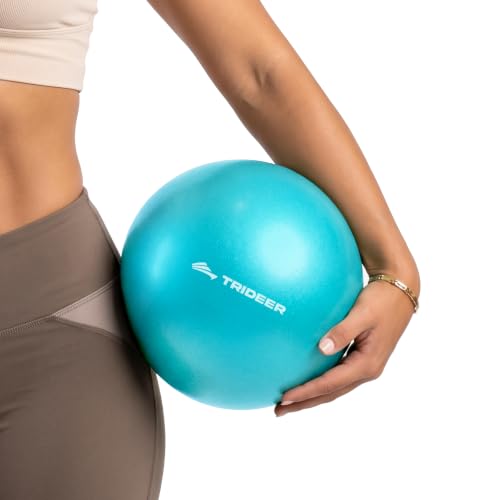
4. Trideer 9 Inch Pilates Ball with Inflation Straw — Runner-up
A 9 in squeeze ball with an inflation straw and a stated one-week break-in period, close in job to the winner.
Best for: readers who want a 9-inch ball and prefer inflating with a straw Skip it if: you dislike the one-week break-in the listing warns about
The Trideer 9 Inch Pilates Ball sits at the same 9 in diameter as the winner, weighs 5 oz, and comes with an inflation straw so a few breaths get you started. Trideer's copy names core strength, balance, stability, coordination, flexibility and muscle activation as the intended uses, which is generic against the ProBody's PT-clinic framing. The listing includes a "kind notice" about a one-week break-in during which the ball may feel softer and need topping up, a detail the winner's listing does not raise. Warranty is 1 year, matching the winner. It is mid-price band here, more expensive than both the ProBody small ball and the APEXUP, and its sales rank sits below the winner's, meaning fewer buyers pick it. Against the winner, the case for this one is the straw and the colour options; the case against is the vaguer positioning and the break-in note.
Pros:
- 9 in diameter, same as the winner
- Inflation straw included, no pump required
- 1 year warranty stated
- Lightweight at 5 oz
Cons:
- Listing warns of a one-week break-in period
- Generic use case wording versus the winner's PT framing
- Mid price band, higher than the budget pick
5. APEXUP 9 Inch Pilates Ball Small Exercise Ball for Yoga — Best budget pick
The cheapest of the five, a 9 in ball in carbon black with a honeycomb-textured surface and two inflation straws.

Best for: buyers who want a 9-inch ball at the lowest price position here Skip it if: you want a published weight, warranty or dimension list
APEXUP is the cheapest of the five, and it delivers the format that matters for bad knees: a 9 in (23 cm) squeeze ball. The listing describes eco-friendly PVC, a honeycomb structure for grip, and two portable inflation straws with a stated inflate time of just over ten seconds. Where the other 9-inch picks give you a weight, a warranty period, and dimensions, this listing does not. That is the honest trade-off for the lowest price in the set: you get the size that matters and less paperwork around it. Sales rank sits below the other two small balls, so fewer buyers here reach for it. If your routine only needs a squeeze target for a fortnight of bridges and inner-thigh work, that may not matter. If you plan to use the ball for months and want a warranty to lean on, the winner is worth the small step up in price.
Pros:
- The cheapest of the six across both formats
- 9 in (23 cm) diameter, the right size for squeeze work
- Two inflation straws included
- Honeycomb texture described for grip
Cons:
- No published weight, warranty period or dimensions
- Slowest seller of the small balls here
- Least detailed listing of the five picks
Small 9-inch ball or full 23-26 in ball?
Both, sometimes. Different, always. A quick way to choose:
- You are following a PT sheet with the words "squeeze between knees" or "under thigh". Buy the 9 in. The ProBody Pilates Ball Small is the default.
- Your knees hurt after long sitting and your programme asks for active sitting or wall squats. Buy the 23-26 in. The Trideer Yoga Ball for Exercise is the default; the ProBody 65cm is the upgrade.
- You have both jobs on the list. Buy the 9 in first. It is lighter, cheaper in this set, and easier to store. Add the 23-26 in when you know you will use it every day.
The 23-26 in balls in this set are close in size, weight and warranty. Both list L as 23-26 in / 58-65 cm, both weigh 2.2 lb, both carry a 1 year warranty. Trideer includes the pump in the same box; ProBody publishes the 880 lb figure. Pick on which of those two details you trust more.
How does a ball actually help sore knees?
How does a ball actually help sore knees when it does not touch the joint directly? Two ways. A 9 in ball squeezed between the knees during a bridge gives the inner thigh a target to press into, so the glutes and hip stabilisers do more work and the knee stays in a neutral line. A 23-26 in ball under the hips keeps the knee angle open above 90 degrees during sitting and lets you set your own depth on a wall squat, so you never push past the point where your knee complains.
What the listings do not tell you about bad knees
The keyword "bad knees" is a shopping filter, not a product specification. None of these five listings is written specifically for knee pain, and none is a medical device. What that means for you as a buyer:
- The phrase "for bad knees" is your judgment to make, not a claim the manufacturer has signed off on. Match the ball to a specific exercise in your routine, not to the phrase.
- Inflation firmness matters more than the burst rating. A softer 9 in ball is easier on a hand-fatigued grip and easier between two knees. Trideer notes a break-in week; the others do not.
- Floor surface matters for the 23-26 in balls. Both list an anti-slip texture, but a smooth hard floor still moves a full-size ball. Use a mat.
- None of these listings publishes a foot-force figure or an impact rating. If your clinician wants a specific PSI or a medical-grade device, buy from a medical supplier, not this category.
The verdict
The best exercise ball for bad knees is the ProBody Pilates Ball Small. At 9 in and 3.2 oz, with a 1 Year Manufacturer warranty and listing copy written around home rehab, it does the one job most sore-knee protocols ask for: a soft, firm-enough target you can hold between your knees or under a thigh without asking the joint to bend. It is the pick a reader can add to a PT sheet and use the same day.
The condition that flips the choice is what your programme actually asks for. If it calls for supported sitting, wall squats, or gentle hip mobility rather than squeezing, buy a 23-26 in ball instead. The Trideer Yoga Ball for Exercise wins that slot for the pump-in-the-box convenience and the 330 lb load claim. The ProBody Pilates Yoga Ball at 23-26 in is the upgrade if you want the 880 lb test figure and the clinic-style safety wording. The Trideer 9 Inch is a fair runner-up to the winner if the inflation straw and colour matter to you. The APEXUP covers the reader who wants the cheapest way into the format and can live with a thinner spec sheet.
FAQ
Is a 9 inch or 65 cm ball better for bad knees?
Is a 9 inch or 65 cm ball better for bad knees? Different jobs. A 9 in ball is a squeeze tool that lets you work the hips and inner thighs while the knee holds a neutral line, which is what most home rehab sheets ask for. A 23-26 in ball is a support tool for sitting and wall squats. If you only buy one, start with the 9 in.
Is an exercise ball worth it if my knees already hurt?
Is an exercise ball worth it if your knees already hurt? Yes for isometric squeezes and for supported sitting that keeps the hips above the knees. The picks here cost less than most single sessions of care, and a 9 in ball at 3.2 oz travels easily. It is not a substitute for a clinician's programme, and it should not be used to push through pain that has recently changed.
What size ball do I need for wall squats with sore knees?
What size ball do I need for wall squats with sore knees? A 23-26 in ball. Both full-size picks here list L as 23-26 in / 58-65 cm, and that size lets the ball roll comfortably between your lower back and the wall while your feet stay planted. A 9 in ball is too small to support the back for this movement and is not designed for that use.
ProBody Pilates Ball Small or Trideer 9 Inch Pilates Ball?
ProBody Pilates Ball Small or Trideer 9 Inch Pilates Ball? Both are 9 in and both carry a 1 year warranty. ProBody weighs 3.2 oz and is the one buyers choose most often here, with PT-clinic framing in the listing. Trideer weighs 5 oz, ships with an inflation straw, and the listing warns of a one-week break-in period. Pick ProBody as the default; pick Trideer for the straw.
What should I avoid when buying an exercise ball for bad knees?
What should I avoid when buying an exercise ball for bad knees? Avoid unlisted diameters, bundles that hide the size of the ball you actually get, and any listing that promises pain relief as a medical claim. None of these five picks is a medical device. Match the size to a specific exercise on your programme, and ask a clinician before adding a new movement that puts weight through the joint.
If your knees hurt today, the smallest useful step is often the right one: pick the 9 in ProBody Pilates Ball Small, add it to two exercises you already do, and see how a week feels. It is easier on the wallet, easier to store, and it is the ball whose listing was written for exactly this use. If your routine grows into supported sitting or wall squats, the Trideer 23-26 in ball is the next thing to add, not the first. Keep the buying decision downstream of the exercise decision, and the ball will do more for your knees than any spec sheet promises.